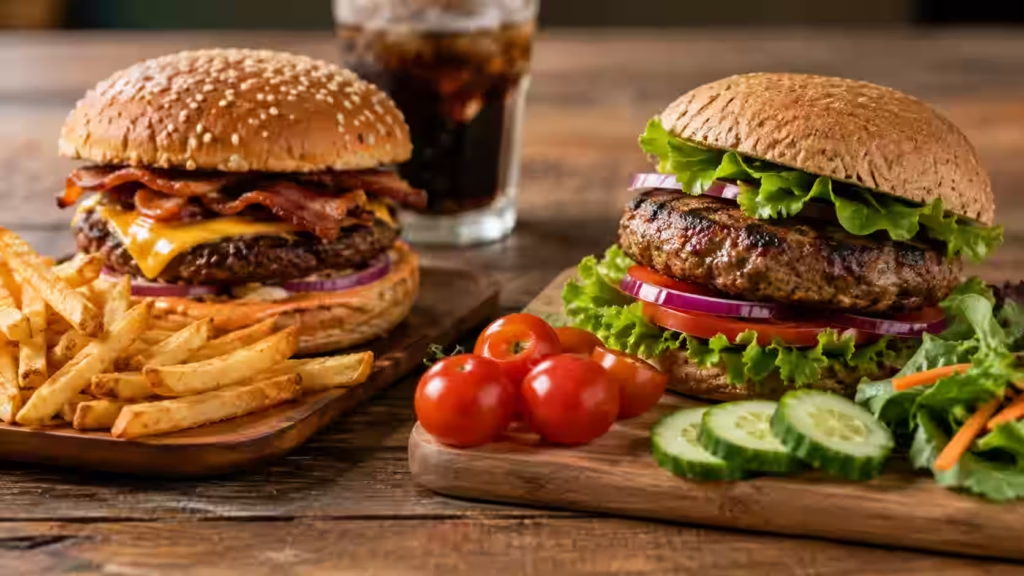
Are burgers bad for you? Not automatically. A burger built from lean meat and fresh toppings can fit into a healthy diet without much trouble. The real risk shows up when you eat large, fatty burgers often — especially fast-food versions loaded with saturated fat, sodium, and refined carbs. Research links frequent burger consumption to weight gain, heart disease, type 2 diabetes, and even certain cancers. Three quick facts before you keep reading: one fast-food burger can use up more than half your daily saturated fat limit, how you cook and top your burger matters as much as the patty itself, and small swaps cut most of the risk without cutting the flavor.
- Nutrition breakdown: What’s actually in a burger — calories, fat, sodium, and protein
- Health risks: How frequent burger eating affects your weight, heart, blood sugar, and cancer risk
- What actually matters: Frequency, meat type, and cooking method — not the burger itself
- Healthier burger tips: Simple swaps that keep the taste and cut the risk
What’s Actually in a Burger? Calories, Fat, and Sodium
A basic 4-ounce beef patty on a plain bun — no cheese, no sauce — runs about 418 calories, 21 grams of fat (roughly 6 grams saturated), and 515 milligrams of sodium, plus around 25 grams of protein. That’s a reasonable meal on its own. The trouble starts when you add cheese, bacon, and specialty sauce, or order from a fast-food chain. A McDonald’s Big Mac comes in around 550 calories with about 10 grams of saturated fat and roughly 1,010 milligrams of sodium. A Burger King Whopper runs even higher, at close to 660 calories with about 12 grams of saturated fat. Order fries and a soda alongside either one, and you can blow past your calorie needs for an entire meal in a single sitting.
- Protein and micronutrients: Beef patties supply high-quality protein along with iron, zinc, and vitamin B12 — nutrients your body needs for healthy blood and cells.
- Fat content: Fat makes up more than half the calories in a typical beef burger, and much of it is saturated. The American Heart Association recommends keeping saturated fat under 6% of your daily calories — about 13 grams on a 2,000-calorie diet. A single fast-food burger can eat up most of that limit before lunch is even over.
- Calories: A large fast-food burger alone can run 500 to 700+ calories. Add sides, and a single meal can rival your entire day’s energy needs.
- Sodium: Buns, cheese, pickles, and sauce push sodium past 500 milligrams per burger, and fast-food versions often top 1,000 milligrams. High sodium intake is closely tied to high blood pressure.
| Nutrient | Homemade Lean Burger (4 oz) | Typical Fast-Food Burger |
|---|---|---|
| Calories | ~350–420 | ~550–660+ |
| Saturated Fat | ~3–4 g | ~10–12 g |
| Sodium | ~350–500 mg | ~900–1,050 mg |
| Fiber | 2–4 g (with whole-grain bun) | 0–3 g |
Figures are rounded averages based on standard nutrition data; exact values vary by brand and recipe.
Why Eating Burgers Too Often Can Harm Your Health
An occasional burger isn’t the problem. Eating high-fat, high-sodium burgers several times a week is where the research raises real concerns.
Weight Gain and Obesity
Calorie-dense burgers make it easy to eat more than you need without feeling full. People who eat fast food often tend to take in more calories overall, and that pattern shows up in higher rates of obesity in national health data.
Heart Disease, Cholesterol, and High Blood Pressure
Saturated fat raises LDL (“bad”) cholesterol, and over time that contributes to blocked arteries. Harvard’s T.H. Chan School of Public Health notes that high red meat intake is linked to a greater risk of heart disease, diabetes, and other chronic conditions compared with diets built around poultry, fish, or legumes. The sodium in a burger-and-fries meal — often well over 1,000 milligrams — adds another layer of risk by raising blood pressure.
Type 2 Diabetes and Metabolic Syndrome
Burgers often come with refined buns and added sugar in the sauce, which can worsen insulin resistance over time when eaten frequently. Some research ties eating fast food more than twice a week to a higher risk of metabolic syndrome — a cluster of issues that includes high blood sugar and poor cholesterol levels.
Cancer Risk From Processed and Well-Done Meat
Plain ground beef is unprocessed, but the World Health Organization classifies processed meat as carcinogenic to humans and red meat as a probable carcinogen, based on a review of more than 800 studies tied mainly to colorectal cancer. Cooking method matters too: charring or grilling meat at high heat can form compounds linked to cancer risk. Choosing fresh, unprocessed patties and avoiding heavy charring both help lower this risk.
Kidney Stones and Gut Health
Two risks often left out of burger articles: eating a lot of animal protein raises uric acid excretion, which can contribute to kidney stones in some people, and some research suggests regular red meat intake may contribute to gut inflammation. Swapping in fish or poultry a few times a week appears to lower both risks.
Cardiologist Dr. Elizabeth Klodas points out that in ground beef, “LDL cholesterol is linearly linked to heart disease risk,” a reminder that the saturated fat in a burger patty does more than pad the calorie count. (Source: HuffPost)
Figure: CDC/NCHS data show that about 32% of U.S. adults ate fast food on any given day between August 2021 and August 2023, with fast food supplying nearly 12% of daily calories on average. Frequent fast-food intake — often burger-based — tracks with lower diet quality and higher obesity rates.
Is Every Burger Bad for You? What Actually Matters
Not all burgers carry the same risk. A few factors do most of the work:
- Frequency: Once a week fits into most healthy diets. Daily or near-daily is where the research shows the clearest risk increase.
- Meat type and processing: A plain, fresh patty carries less risk than a burger stacked with bacon, processed cheese, and cured toppings.
- Cooking method: Grilling or baking at moderate heat beats deep-frying or heavy charring.
- What’s on the side: A burger with a salad and water looks very different, nutritionally, than the same burger with fries and a large soda.
How to Build a Healthier Burger
You don’t have to give up burgers — just make a few smarter choices:
- Choose leaner protein: Pick 90–95% lean ground beef, lean ground turkey, or a plant-based patty. Replacing some red meat with plant protein supports better heart health.
- Load up on vegetables: Mix chopped spinach or onion into the patty, then pile on lettuce, tomato, avocado, and onion. Vegetables add fiber and volume, so you’re satisfied with a smaller patty.
- Go whole grain or bunless: A whole-wheat bun adds fiber; a lettuce wrap cuts refined carbs entirely. Keep the cooked patty close to 3–4 ounces — about the size of your palm.
- Grill or bake instead of frying: Letting fat drip away during cooking cuts saturated fat without changing the flavor much.
- Go light on extras: Skip or reduce bacon, extra cheese, and mayo-based sauces. Season with garlic, mustard, or fresh herbs instead of reaching for the salt shaker.
- Pick a healthier side: Swap fries for a side salad or roasted vegetables, and choose water or unsweetened tea over soda.
Make these swaps and you get a satisfying burger with far less saturated fat and sodium. A bean-and-veggie patty on a whole-grain bun with tomato and onion, for instance, delivers the same craving-crushing bite with a fraction of the risk.
Frequently Asked Questions
Is it okay to eat a burger once a week?
For most healthy adults, yes. Weekly burgers fit comfortably into a balanced diet, especially if you choose leaner meat, add vegetables, and skip the fries and soda combo.
Are homemade burgers healthier than fast food?
Usually. Cooking at home lets you control the meat’s leanness, portion size, sodium, and toppings — all areas where fast-food chains tend to go heavy.
What’s the healthiest way to cook a burger?
Grilling or baking at moderate temperatures, and avoiding heavy charring, cuts down on both saturated fat runoff loss and the cancer-linked compounds that form when meat burns.
Is a burger healthier than pizza or fried chicken?
It depends on the specific order. A plain burger with vegetables often beats a heavily topped pizza or deep-fried chicken sandwich, but a bacon-cheese burger with fries can easily out-calorie both. Compare the actual nutrition facts rather than assuming one category wins.
Also Read: Heart Health Foods: Best Diet Tips to Protect Your Heart
Disclaimer: This article is for educational purposes only and isn’t a substitute for professional medical advice. Talk with your doctor or a registered dietitian before making major changes to your diet.