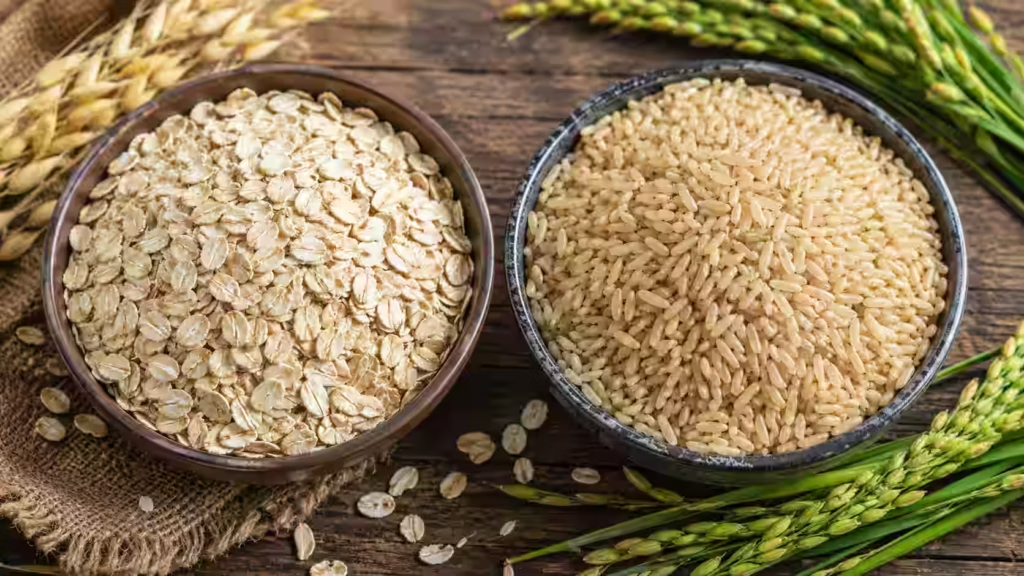
Oats generally have the edge for heart health and blood sugar control, thanks to a unique soluble fiber called beta-glucan, while brown rice offers more minerals per serving and works better for people avoiding oats due to cross-contamination concerns. Both are whole grains, and neither is “unhealthy” — the right pick really depends on your specific goal.
In this guide, you’ll get a clear, side-by-side answer for:
- Weight loss: which grain keeps you fuller for longer
- Heart health: the cholesterol-lowering effect backed by an FDA health claim
- Blood sugar: what actual diabetes-risk research shows for each grain
Oats vs Brown Rice: Nutrition Facts Side-by-Side
Before comparing health outcomes, it helps to see what’s actually in each grain. Here’s how a typical cooked serving compares, based on USDA FoodData Central figures.
| Nutrient (per 1 cup cooked) | Oatmeal | Brown Rice |
|---|---|---|
| Calories | ~166 | ~215 |
| Protein | ~5.9 g | ~5 g |
| Carbohydrates | ~28 g | ~45 g |
| Fiber | ~4 g | ~3.5 g |
| Fat | ~3.6 g | ~1.8 g |
| Glycemic Index (approx.) | Low–moderate (~53–60) | Moderate (~50–68) |
Figures are approximate and vary by brand, variety, and cooking method (steel-cut vs. instant oats; long-grain vs. medium-grain rice). Data source: USDA FoodData Central — Oatmeal and USDA FoodData Central — Brown Rice.
Quick takeaway: Oats are lower in calories and carbs per serving but slightly higher in fat (a heart-healthy, unsaturated fat). Brown rice provides more total carbohydrate energy, which can suit active people who need more fuel.
Which Is Better for Weight Loss? Oats vs Brown Rice
Oats and Satiety: The Beta-Glucan Advantage
Oats contain beta-glucan, a soluble fiber that turns into a thick gel in your gut. This gel slows stomach emptying and blunts hunger signals. A review of appetite research concluded that oat beta-glucan has a measurably positive effect on feelings of fullness after eating (PMC, appetite and satiety review). A separate controlled trial found that oatmeal reduced how much people ate later in the day compared with a ready-to-eat breakfast cereal of similar calories (Pennington Biomedical Research Center study).
Brown Rice and Fullness
Brown rice still outperforms refined white rice for satiety because its intact bran layer slows digestion. But gram for gram, it has less soluble fiber than oats, so it’s typically less filling per calorie.
“Short- and long-term oats consumption lowers cholesterol levels, regulates blood sugars, and improves liver functions.” — Melissa Mitri, RD, registered dietitian and nutrition writer
Weight loss bottom line:
- Oats win on calories-per-cup and satiety per bite — helpful if you’re managing portion sizes.
- Brown rice can still fit a weight-loss plan, especially paired with lean protein and vegetables to balance the meal.
Which Is Better for Heart Health?
This is where oats have the strongest official backing. The U.S. Food and Drug Administration approved a health claim in 1997 allowing oat products to state that beta-glucan soluble fiber, as part of a diet low in saturated fat, may reduce the risk of heart disease (Federal Register, FDA rule). A research review backing that claim found consistent LDL (“bad”) cholesterol reductions with regular oat beta-glucan intake (PubMed, cholesterol-lowering effects of oat β-glucan).
Brown rice doesn’t carry an equivalent FDA heart-health claim, but it isn’t heart-unhealthy — it contains gamma-oryzanol and other bran compounds with antioxidant properties, and its fiber content still beats white rice by a wide margin.
Heart health bottom line:
- Oats have the strongest, most direct evidence for lowering LDL cholesterol.
- Brown rice is a reasonable heart-healthy carbohydrate choice, particularly when replacing white rice.
Which Is Better for Blood Sugar and Diabetes Risk?
This comparison has some of the best long-term data of any grain match-up. A Harvard study following nearly 200,000 adults for up to 22 years found that people eating five or more servings of white rice weekly had a higher risk of type 2 diabetes, while those eating two or more servings of brown rice weekly had a lower risk (Sun et al., Archives of Internal Medicine, 2010). Swapping just 50 grams a day of white rice for brown rice was linked to a 16% lower diabetes risk in that study.
A more recent meta-analysis reinforced this: each 50 g/day serving of brown rice was associated with a 13% lower risk of type 2 diabetes across pooled studies (Yu et al., BMJ Open, 2022).
“This suggests that what we observed is unlikely the result of other factors.” — Dr. Qi Sun, nutrition researcher, Harvard T.H. Chan School of Public Health
Oats haven’t been studied against diabetes risk with quite the same scale of long-term data, but their low-to-moderate glycemic index and high soluble fiber content are well established for producing a slower, steadier blood sugar rise than most refined grains.
Blood sugar bottom line:
- Brown rice has the strongest large-cohort evidence specifically tied to lower type 2 diabetes risk, mainly by comparison with white rice.
- Oats tend to produce a gentler blood sugar response meal-to-meal thanks to beta-glucan’s gel-forming effect.
- Both beat their refined counterparts (instant oat packets with added sugar; white rice) by a wide margin.
Gluten, Allergies, and the Arsenic Question
Neither grain is risk-free for everyone, and it’s worth knowing the specifics.
Oats: Watch for Cross-Contamination
Oats are naturally gluten-free, but they’re frequently grown or processed alongside wheat, barley, or rye, which can introduce trace gluten. People with celiac disease should look specifically for certified gluten-free oats.
Brown Rice: Arsenic in the Bran Layer
Because arsenic naturally accumulates in soil and concentrates in the rice bran, brown rice contains more inorganic arsenic than white rice. The FDA has set a specific action level for arsenic in infant rice cereal due to this concern. For most healthy adults, occasional brown rice consumption isn’t a significant risk, but simple steps reduce exposure:
- Rinse rice thoroughly before cooking
- Cook using extra water (roughly 6 parts water to 1 part rice) and drain the excess
- Vary your grains rather than eating brown rice at every meal
Micronutrients: Where Each Grain Shines
| Oats Stand Out For | Brown Rice Stands Out For |
|---|---|
| Manganese (bone & metabolism support) | Magnesium (muscle & nerve function) |
| Thiamine (B1) for energy metabolism | Selenium (antioxidant support) |
| Iron | Vitamin B6 |
| Beta-glucan (unique cholesterol-lowering fiber) | Gamma-oryzanol (antioxidant compound) |
How to Choose Between Oats and Brown Rice
- Trying to lower cholesterol? Lean toward oats — the FDA-recognized beta-glucan claim is hard to beat.
- Managing or preventing type 2 diabetes? Brown rice has strong long-term outcome data, especially as a white rice swap.
- Focused on weight loss and portion control? Oats offer more fullness per calorie.
- Need more fuel for training or a physically demanding day? Brown rice’s higher carbohydrate density can work in your favor.
- Avoiding gluten strictly? Choose certified gluten-free oats or stick with brown rice.
You don’t have to pick just one. Many dietitians recommend simply rotating both into your week — oatmeal for breakfast, brown rice with dinner — for variety in fiber types, minerals, and meal texture.
Simple ways to improve either grain:
- Choose steel-cut or rolled oats over heavily processed instant packets, which often add sugar and have a higher glycemic index.
- Cook and then cool brown rice before reheating — this increases resistant starch, which digests more slowly and may modestly blunt the blood sugar response.
- Pair either grain with protein or healthy fat (eggs, nuts, beans) to further flatten the post-meal blood sugar curve.
- Avoid loading oatmeal with sugary toppings, which can offset its blood-sugar benefits.
Frequently Asked Questions
Is oatmeal healthier than rice for diabetics?
Both can fit a diabetes-friendly diet in appropriate portions. Oats tend to produce a gentler immediate blood sugar rise due to beta-glucan, while brown rice has strong long-term research linking it to lower type 2 diabetes risk compared with white rice. Neither replaces personalized guidance from a doctor or dietitian.
Can I eat oats and brown rice together in the same diet?
Yes. There’s no conflict between the two — rotating whole grains actually broadens your intake of different fiber types, minerals, and plant compounds.
Which has more protein, oats or brown rice?
They’re close. A cooked cup of oatmeal has roughly 5.9 g of protein, while a cooked cup of brown rice has about 5 g — neither is a significant standalone protein source, so pairing with beans, eggs, or lean meat is worth doing either way.
Does cooling brown rice really lower its glycemic impact?
Cooling cooked rice promotes the formation of resistant starch, a type of starch your body digests more slowly, which can modestly reduce the blood sugar spike compared with rice eaten immediately after cooking.
Also Read: Haritaki Benefits for Digestion, Immunity, and Skin
Medical Disclaimer: This article is intended for general informational purposes only and does not constitute medical or nutritional advice. It is not a substitute for professional diagnosis or treatment. If you have diabetes, heart disease, celiac disease, or another condition affected by diet, please consult a licensed healthcare provider or registered dietitian before changing your eating pattern.