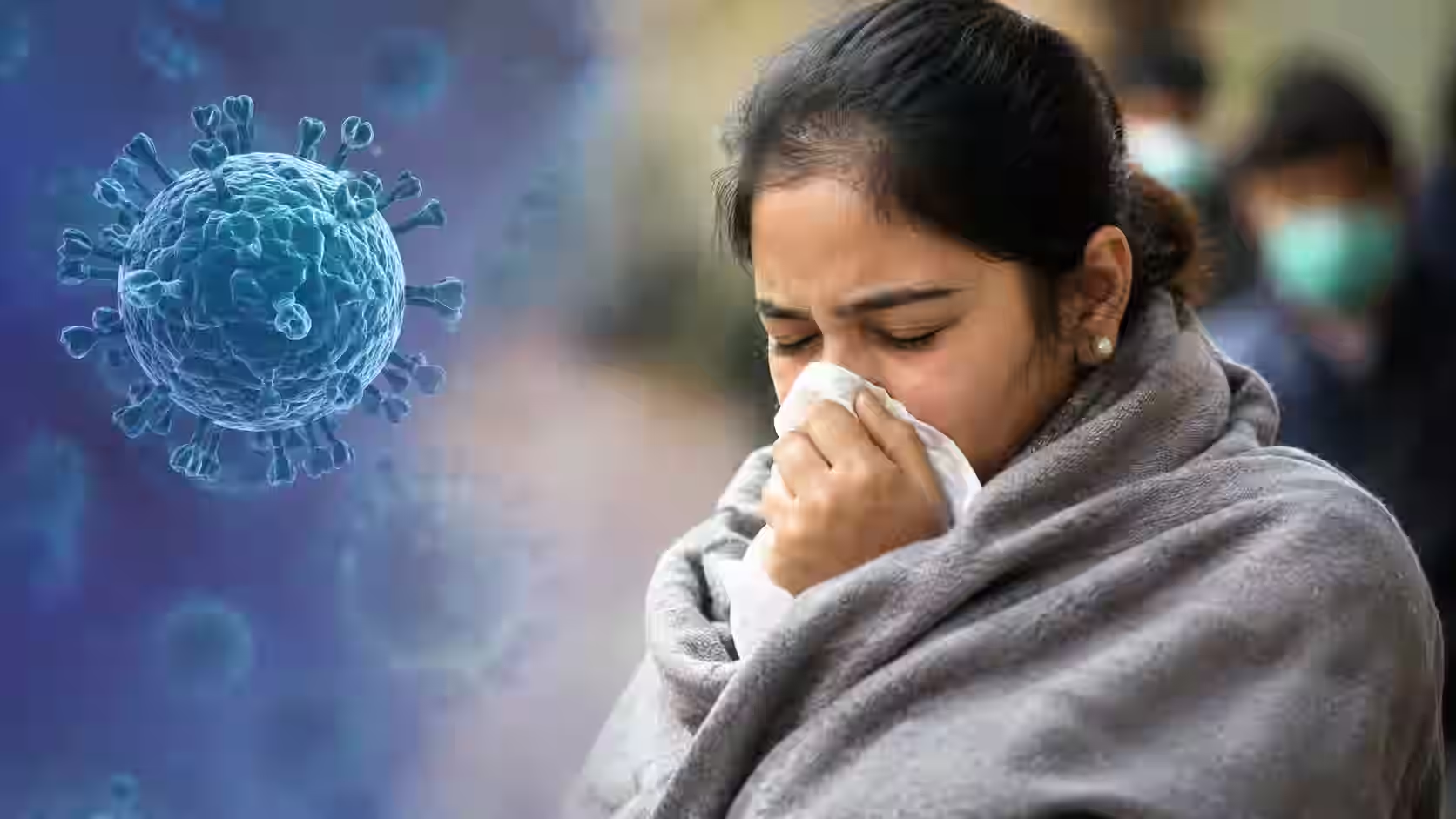
Is COVID Coming Back in 2026?

Yes, COVID-19 activity is increasing again in the United States during summer 2026, but that does not mean the country is returning to the severe pandemic conditions of 2020 or 2021. The latest CDC respiratory-illness data, updated August 21, 2026, shows that national and regional COVID-19 activity is increasing, while the overall amount of acute respiratory illness causing people to seek health care remains very low.
The important distinction is between rising transmission and rising severity. More people can be infected while hospitals and emergency departments remain far below the extreme levels seen during earlier pandemic waves.
This summer wave matters because it can still cause missed work, school and travel, spread through families and workplaces, and lead to serious illness in people at higher risk.
In this guide, you will learn:
- What the latest 2026 COVID data actually shows
- Why COVID can rise during summer
- Whether the current wave is dangerous
- Which symptoms to watch for
- What current variants mean
- When testing and treatment matter
- Who remains most vulnerable
- What you can do right now
What the Latest 2026 COVID Data Shows
The clearest message from current surveillance is that COVID-19 is moving upward, even though the overall respiratory-illness burden remains low.
The CDC reported on August 21 that national and regional COVID-19 activity was increasing. Its dashboard also continues to track wastewater, emergency-department activity, severe illness, hospital data, vaccination trends and viral variants.
That gives us a more useful picture than simply looking at reported case counts.
Why reported COVID cases do not tell the whole story
During the early pandemic, many infections were detected through laboratory testing and then reported to health authorities. Today, many people use at-home tests, do not test at all, or recover without seeking medical care.
That makes wastewater surveillance particularly useful.
Wastewater systems look for SARS-CoV-2 signals in sewage from a community. Because infected people can shed viral material even when they do not visit a doctor, wastewater can provide an early indication that transmission is changing. The CDC says increased wastewater viral activity may indicate a higher risk of infection in an area.
That does not mean wastewater can tell us the exact number of people infected. Instead, think of it as an early warning signal.
Transmission and severity are different measurements
This is one of the most important points to understand about the 2026 summer wave.
A rise in infections does not automatically mean a rise to pandemic-era severity.
To understand the real health impact, researchers and public-health officials look at multiple indicators:
| Indicator | What it tells us |
|---|---|
| Wastewater | Whether viral circulation appears to be increasing or decreasing |
| Emergency-department visits | Whether more people are seeking medical care |
| Hospitalizations | Whether infections are causing more serious illness |
| Deaths | The most severe end of the disease burden |
| Variant surveillance | How the virus is changing |
| Vaccination data | How much immune protection is being maintained |
This broader approach prevents one dramatic headline from creating an inaccurate picture.
Why Can COVID Come Back in the Summer?
COVID-19 never completely disappeared. Instead, SARS-CoV-2 continues to circulate throughout the year and produces waves of higher and lower activity.
Recent U.S. research has found a recurring pattern of COVID activity in late summer and winter. One large analysis of U.S. surveillance data found that SARS-CoV-2 activity consistently peaked during July–September and December–February during the study period.
A 2026 study also found evidence for repeated summer and winter waves and identified waning immunity, climatic factors and viral evolution as contributors to the pattern.
Several factors can overlap.
1. Immunity changes over time
Protection against infection can decrease after vaccination or infection. That does not mean the immune system suddenly stops working. It means protection can change as time passes.
This helps create opportunities for SARS-CoV-2 to spread again, particularly when a large number of people have not had a recent exposure or updated vaccine.
2. The virus continues to evolve
SARS-CoV-2 keeps changing.
Some genetic changes can give a lineage an advantage in spreading through a population that already has substantial immunity. A new variant does not have to cause more severe disease to contribute to a wave.
That distinction is important:
More transmissible does not automatically mean more dangerous.
The WHO continues to track SARS-CoV-2 variants, including lineages such as JN.1, NB.1.8.1, XFG and BA.3.2. Current WHO classifications include variants of interest and variants under monitoring, reflecting ongoing surveillance rather than proof that every monitored variant causes more severe disease.
3. Summer brings more movement
Summer vacations, airports, hotels, camps, concerts, festivals and family gatherings can increase the number of contacts between people from different communities.
A virus that is already circulating can take advantage of those connections.
4. Air conditioning changes indoor behavior
Hot weather pushes people indoors, where air conditioning and closed windows can reduce natural ventilation.
The key factor is not simply “cold air.” It is the amount of time people spend sharing indoor air, especially when someone infected is nearby.
5. COVID has developed a different seasonal rhythm than flu
Influenza is strongly associated with the colder months in the United States.
COVID-19 is less predictable.
Recent research suggests that SARS-CoV-2 can produce significant waves during both summer and winter. One 2026 paper found that U.S. COVID activity has shown persistent twice-yearly waves since the emergence of Omicron, although the timing and size of waves vary between states.
That means a summer rise should no longer be treated as surprising.
Is the 2026 Summer COVID Wave Dangerous?
For most people, the most useful question is not simply “Are cases going up?”
A better question is:
Are infections causing more severe illness?
Current CDC data indicates that COVID activity is increasing, but the overall amount of acute respiratory illness leading people to seek health care remains very low nationally.
That is reassuring, but it is not a reason to ignore the virus.
COVID-19 can still cause:
- Significant respiratory illness
- Hospitalization
- Serious complications
- Long-lasting symptoms
- Death, particularly among people at increased risk
The risk is not distributed equally across the population.
Who should take the summer wave more seriously?
People at increased risk of severe COVID-19 include many older adults and people with certain medical conditions or weakened immune systems.
The CDC specifically notes that older adults and people with risk factors for severe disease may benefit from prompt COVID-19 treatment when infected.
This is why the same summer wave can feel like a minor illness for one person but become a medical emergency for another.
What Are the COVID Symptoms in 2026?
COVID symptoms can still vary widely between people and can change as the virus evolves.
According to the CDC, possible symptoms include:
- Fever or chills
- Cough
- Sore throat
- Runny or stuffy nose
- Fatigue
- Headache
- Muscle or body aches
- Shortness of breath
- Nausea or vomiting
- Diarrhea
- New loss of taste or smell
Symptoms may appear 2–14 days after exposure.
One important problem is that symptoms can overlap with flu and other respiratory infections.
You cannot reliably identify COVID from symptoms alone.
That makes testing useful when the result would change what you do next, especially when treatment may be appropriate.
When Should You Test for COVID?
Consider testing when you develop symptoms that could be caused by COVID, particularly after a known exposure or during a period of increased local activity.
Testing becomes especially important for people at higher risk because early diagnosis can create a treatment opportunity.
A negative home test does not necessarily end the question if symptoms continue. The timing of testing and the type of test matter, so people with ongoing symptoms or higher medical risk should consider discussing their situation with a healthcare professional.
COVID Treatment Still Has a Time Window
One of the biggest mistakes people can make is waiting several days before asking about treatment when they are at high risk.
The CDC says people with mild or moderate COVID-19 who have risk factors for severe disease may benefit from treatment, and treatment should begin as soon as possible.
For example, the antiviral nirmatrelvir-ritonavir, commonly known as Paxlovid, must be started within five days of symptom onset. Remdesivir can be started within seven days for eligible patients.
That means:
Do not wait until you feel seriously ill before asking whether you qualify for treatment.
Treatment decisions depend on factors such as age, medical history, medications, kidney or liver problems, pregnancy status and other considerations.
What About the 2026 COVID Variants?
Variant names can make COVID headlines sound more frightening than they are.
A variant is simply a genetically distinct version of SARS-CoV-2.
The presence of a new lineage does not automatically mean:
- It causes more severe disease
- Vaccines stop working
- Previous infection provides no protection
- A new pandemic has started
The WHO’s current surveillance lists several SARS-CoV-2 lineages under monitoring, including NB.1.8.1, XFG and BA.3.2, while JN.1 remains classified as a variant of interest.
Scientists watch variants for changes in transmission, immune escape, clinical severity and other characteristics.
For everyday readers, the bigger takeaway is simple:
Watch the trend, not just the variant name.
A highly publicized variant can attract attention without becoming the dominant driver of serious disease.
Can COVID Come Back Like 2020?
A summer wave in 2026 is not the same thing as a return to the original pandemic emergency.
Today’s situation is different in several important ways.
Many people have some level of immune protection from previous infection, vaccination, or both. Medical professionals also have more experience recognizing and treating COVID-19 than they did at the beginning of the pandemic.
At the same time, SARS-CoV-2 continues to evolve and circulate.
So the better model is not:
COVID disappeared → COVID returned
It is:
COVID continues circulating → activity falls → activity rises again → another wave follows.
That distinction can reduce unnecessary fear while keeping people alert to genuine health risks.
What the 2026 Summer Wave Means for Fall and Winter
A summer wave does not tell us exactly what will happen next.
COVID patterns can change because of:
- New variants
- Immunity levels
- Vaccination uptake
- Weather and indoor behavior
- Regional differences
- Changes in testing and reporting
Past U.S. surveillance suggests that summer and winter can both produce substantial COVID activity.
A summer increase may also influence the amount of population immunity later in the year, but it would be misleading to predict the exact size or timing of a future winter wave from summer data alone.
The safest approach is to watch updated surveillance rather than assume that one year’s pattern will repeat perfectly.
Do COVID Vaccines Still Matter in 2026?
Yes, vaccination remains an important tool for reducing the risk of severe COVID-19.
The CDC’s current vaccination information says COVID-19 vaccines help protect against severe illness, hospitalization and death, with particular importance for people at higher risk. Current U.S. guidance uses individual-based decision-making for the 2025–2026 vaccine season.
Because vaccine guidance can change, readers should check the latest CDC and FDA recommendations rather than rely on an old vaccination schedule.
A practical point is more important than memorizing a schedule:
Ask a healthcare professional whether you are due for an updated COVID-19 vaccine based on your age, risk factors and vaccination history.
How to Reduce Your Risk During the Summer Wave
You do not need to treat everyday life as if it were 2020 to take reasonable precautions.
Focus on the situations that actually increase exposure.
Improve indoor air
Open windows when practical, increase ventilation, use air filtration and avoid prolonged time in poorly ventilated spaces when respiratory viruses are spreading.
Stay home when you’re sick
Going to work, school or social events while sick can expose other people.
The CDC recommends taking additional precautions when you are sick, including cleaner air, hygiene, masking and physical distancing when appropriate.
Consider a well-fitting mask in higher-risk situations
Masking can still be useful when someone is sick, when you are around vulnerable people, or when community transmission is increasing.
Test when the answer matters
Testing is most useful when the result changes your next decision, such as whether to seek treatment, avoid vulnerable family members or stay home.
Know your treatment options before you need them
If you have risk factors for severe COVID-19, know how you would contact a healthcare professional quickly if symptoms begin.
This can matter because antiviral treatment has a short starting window.
When to Seek Emergency Medical Care
Most COVID infections can be managed outside the hospital, but some symptoms require urgent attention.
The CDC lists emergency warning signs including:
- Trouble breathing
- Persistent chest pain or pressure
- New confusion
- Inability to wake or stay awake
- Pale, gray or blue-colored skin, lips or nail beds depending on skin tone
These signs require immediate medical attention.
Do not wait for a COVID test result if someone is experiencing an emergency warning sign.
What Should You Do Right Now?
The 2026 summer COVID wave calls for awareness, not panic.
For most people, the current data does not resemble the extreme health-system pressure seen during the worst periods of the pandemic. At the same time, rising transmission means your chance of encountering SARS-CoV-2 may be increasing in some communities.
A sensible plan is:
- Know your local trend. National numbers can hide major state and regional differences.
- Pay attention to symptoms. COVID can look like many other respiratory infections.
- Test when useful. Especially when treatment or protecting a vulnerable person is involved.
- Act quickly if you are high risk. COVID treatments work best when started early.
- Stay current on health guidance. Vaccine and treatment recommendations can change.
- Protect vulnerable people. Older adults and people with certain health conditions can face greater consequences from infection.
The Bottom Line: Is COVID Coming Back?
COVID is not “coming back” because it never completely went away. What is happening in summer 2026 is another increase in SARS-CoV-2 activity.
The CDC reported increasing national and regional COVID activity as of August 21, 2026, while overall acute respiratory illness remained very low.
That makes the current situation more nuanced than either extreme headline:
It is not “COVID is over.”
And it is not:
“The pandemic is starting all over again.”
The better description is that COVID has become a recurring respiratory threat capable of producing waves in both summer and winter.
The most important things to watch are not simply case headlines. Look at community transmission, wastewater trends, emergency-department visits, hospitalizations and severe outcomes.
For people at higher risk, early testing, prompt treatment and staying up to date with recommended vaccination can make the biggest difference.
Frequently Asked Questions
Is COVID coming back in the summer of 2026?
Yes. COVID-19 activity is increasing in the United States during summer 2026, although overall acute respiratory illness remains very low nationally according to the CDC’s August 21 update.
Is there a COVID summer wave in 2026?
Yes. Multiple surveillance indicators show increased COVID activity during summer 2026, with the CDC reporting increasing national and regional activity.
Are COVID cases rising in the United States?
Current CDC surveillance shows COVID activity is increasing nationally and regionally, although the level remains low in many areas.
What are the current COVID symptoms?
Common possible symptoms include cough, sore throat, congestion, fatigue, headache, fever or chills, muscle aches, shortness of breath, nausea, vomiting and diarrhea.
Is the 2026 COVID wave as bad as the original pandemic?
Current data does not suggest that the 2026 summer increase is comparable to the extreme pandemic conditions of the early 2020s. Rising infections and severe disease are different measurements.
Can COVID happen in summer?
Yes. U.S. surveillance and recent research show that COVID-19 can produce substantial activity during late summer as well as winter.
Who is most at risk from COVID?
Risk increases with older age and certain medical conditions or weakened immune systems. People at higher risk should contact a healthcare professional promptly if they develop symptoms.
How quickly does COVID treatment need to start?
For eligible higher-risk patients, some COVID treatments must begin within five days of symptom onset, while remdesivir can be started within seven days.
Could there be another COVID wave later in 2026?
It is possible. COVID activity has shown recurring summer and winter waves, but the timing and size of future waves cannot be predicted precisely.
Expert Perspective
“COVID-19 is ticking up pretty much everywhere nationally.”
— Dr. John Brooks, infectious disease specialist at Emory University, quoted in reporting on the 2026 summer wave.
The quote is useful because it captures the central message of the current data: transmission can be increasing broadly without the country experiencing pandemic-level severity.
Also Read: Candida Auris Symptoms: What Are the Early Warning Signs?
Disclaimer: This article is for educational purposes only and does not replace professional medical advice, diagnosis, or treatment. COVID-19 guidance can change as surveillance data, vaccines, and treatments are updated. Contact a qualified healthcare professional for advice based on your individual health situation.
References
- CDC — Respiratory Illnesses Data Channel: Latest U.S. COVID-19 activity and respiratory illness data
- CDC — COVID-19 Symptoms: Current COVID-19 symptoms and emergency warning signs
- CDC — COVID-19 Treatment: Current outpatient COVID-19 treatment options and treatment timing
- WHO — COVID-19 Variants: Current SARS-CoV-2 variants under monitoring
- NCBI/PMC — U.S. COVID-19 Seasonality Research: Research on recurring summer and winter COVID-19 activity in the United States