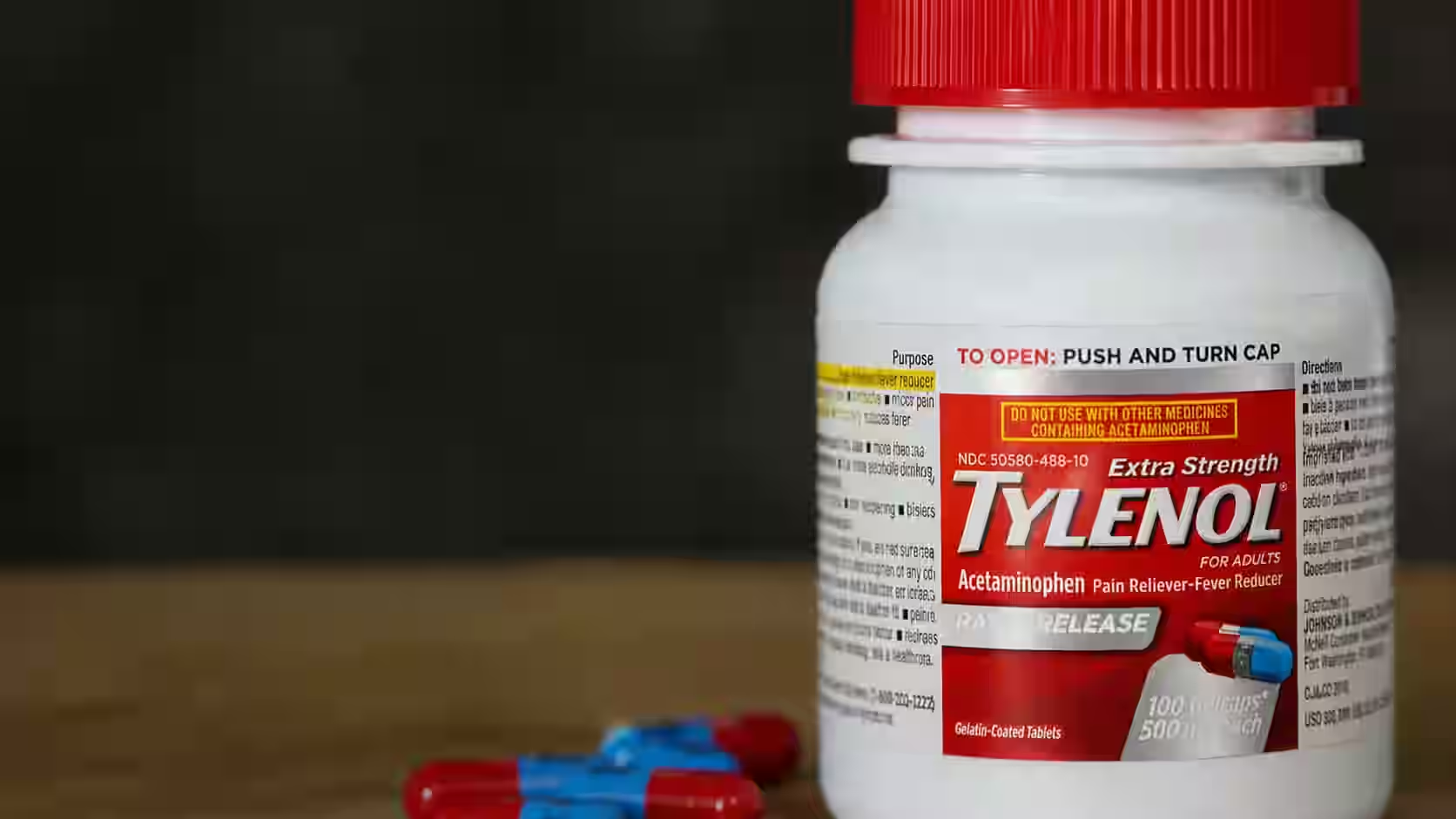
Cholesterol medicines are prescription (and in some cases over-the-counter) drugs that lower “bad” LDL cholesterol, lower triglycerides, or raise “good” HDL cholesterol to cut your risk of heart attack and stroke. The five most commonly prescribed options are statins, ezetimibe, PCSK9 inhibitors, bempedoic acid, and bile acid sequestrants — each working differently in the liver or gut, and each carrying its own trade-off between benefit and side-effect risk. Statins remain the first choice for most people, but if you can’t tolerate them or need extra LDL lowering, the other four fill in the gaps. Below, we break down how each one works, who it’s for, and what to watch out for, based on guidance from the Mayo Clinic, American Heart Association, CDC, FDA, MedlinePlus, and NHS.
Quick Answer: The 5 Best Cholesterol Medicines at a Glance
| # | Medicine Class | Common Brand Names | How It Helps | Form |
|---|---|---|---|---|
| 1 | Statins | Lipitor, Crestor, Zocor, Pravachol | Lowers LDL & triglycerides, modestly raises HDL | Daily pill |
| 2 | Ezetimibe | Zetia (also in Vytorin, Roszet) | Blocks cholesterol absorption in the gut | Daily pill |
| 3 | PCSK9 inhibitors | Repatha, Praluent, Leqvio | Helps the liver clear more LDL from the blood | Injection every 2–4 weeks |
| 4 | Bempedoic acid | Nexletol (also in Nexlizet) | Blocks cholesterol production in the liver | Daily pill |
| 5 | Bile acid sequestrants | Welchol, Prevalite, Colestid | Forces the liver to use cholesterol to replace bile acids | Pill or powder |
Who Actually Needs Cholesterol Medicine?
Lifestyle changes come first, but according to criteria used by the CDC and MedlinePlus, your doctor may recommend medication if:
- You’ve already had a heart attack, stroke, or have peripheral arterial disease
- Your LDL (“bad”) cholesterol is 190 mg/dL or higher
- You’re 40–75 years old with diabetes and an LDL of 70 mg/dL or higher
- You’re 40–75 years old with elevated heart disease risk and an LDL of 70 mg/dL or higher
Even once you’re on medication, diet and exercise still matter — the Mayo Clinic notes that medicine and healthy habits work together, and stopping lifestyle changes just because you’re on a pill undercuts your results.
1. Statins — The First-Line Choice
Statins (atorvastatin/Lipitor, rosuvastatin/Crestor, simvastatin/Zocor, pravastatin, lovastatin, fluvastatin, pitavastatin) work by slowing cholesterol production in the liver and boosting the liver’s ability to clear existing LDL from the bloodstream. Both the NHS and American Heart Association identify statins as the most commonly prescribed and usually the first medicine tried.
Benefits:
- Lower LDL cholesterol and triglycerides significantly
- Modestly raise HDL cholesterol
- The FDA notes that certain statins have been shown to cut the risk of heart attack, stroke, and heart-related hospitalizations in people with existing heart disease or major risk factors
Common side effects: headache, nausea, diarrhea, constipation, muscle or joint pain, upset stomach
Serious but less common risks: muscle breakdown (rhabdomyolysis), liver problems, and a modestly increased risk of developing type 2 diabetes
Interestingly, the Mayo Clinic points out that placebo-controlled trials suggest a lot of statin-linked muscle pain isn’t actually caused by the drug itself — though people over 80, those on multiple medications, and those with liver or kidney disease are more likely to experience it.
2. Ezetimibe — The Non-Statin Add-On
Ezetimibe (Zetia) takes a different approach: instead of touching the liver, it blocks cholesterol from being absorbed in your intestines. The American Heart Association calls it the most widely used non-statin option for lowering LDL, and it’s often combined with a statin in single-pill combinations like Vytorin (ezetimibe-simvastatin) or Roszet (ezetimibe-rosuvastatin).
Benefits:
- Lowers LDL cholesterol, with a mild effect on triglycerides and HDL
- Can be added to a statin for extra LDL reduction without a big increase in side effects
- Useful for people who can’t tolerate a high statin dose
Common side effects: diarrhea, joint pain, fatigue, gas, stomach pain
Serious but less common risks: the FDA warns of abnormal liver-function tests and, rarely, serious muscle problems — especially when combined with a statin; Mayo Clinic also notes rare allergic reactions and pancreatitis
3. PCSK9 Inhibitors — For Stubbornly High LDL
PCSK9 inhibitors are injectable medicines reserved mainly for people with genetically very high LDL (familial hypercholesterolemia), existing heart disease, or statin intolerance. There are two flavors: monoclonal antibodies — alirocumab (Praluent) and evolocumab (Repatha) — and the newer siRNA-based inclisiran (Leqvio), which only needs dosing twice a year after the starting doses.
Benefits:
- Substantially lowers LDL cholesterol, even in people already on a statin
- The FDA states that PCSK9 inhibitors can reduce the chance of heart attack, stroke, and related hospitalizations in people with known cardiovascular disease
- Inclisiran’s twice-yearly dosing schedule helps with adherence
Common side effects: injection-site redness, itching or bruising, flu-like symptoms, back pain, sore throat
Serious but less common risks: serious allergic reactions, including swelling of the face, lips, tongue or throat
4. Bempedoic Acid — The Newer Oral Non-Statin
Bempedoic acid (Nexletol), and its combination with ezetimibe (Nexlizet), is an ACL (ATP-citrate lyase) inhibitor that blocks a different step of cholesterol production in the liver than statins do. It’s typically used alongside other cholesterol medicines when more LDL lowering is needed, or as a statin alternative.
Benefits:
- Lowers LDL cholesterol through a statin-free mechanism
- Available as a once-daily pill
- Can be combined with ezetimibe for a bigger LDL drop
Common side effects: cold or flu-like symptoms, back pain, stomach pain, muscle spasms, elevated liver enzymes
Serious but less common risks: raised uric acid levels (which can trigger gout) and, rarely, tendon rupture or injury — the FDA advises getting medical help for sudden joint pain, swelling, or a “popping” sensation in a tendon
5. Bile Acid Sequestrants — The Original Non-Statin Option
Bile acid sequestrants (cholestyramine/Prevalite, colesevelam/Welchol, colestipol/Colestid) bind bile acids in the intestine so they’re excreted instead of reabsorbed. Since the body needs bile acids, the liver pulls more cholesterol out of the blood to make replacements — indirectly lowering LDL.
Benefits:
- Lowers LDL cholesterol and may slightly raise HDL
- Doesn’t get absorbed into the bloodstream, which can make it a reasonable option during pregnancy under medical supervision (always confirm with your doctor)
- Useful for people who can’t take statins
Common side effects: constipation, bloating, gas, heartburn, nausea
Serious but less common risks: intestinal blockage, raised triglycerides, reduced absorption of fat-soluble vitamins, and interference with the absorption of other medicines — the FDA recommends timing other drugs around your dose
Other Options Worth Knowing: Fibrates, Niacin, and Omega-3s
If your main problem is high triglycerides rather than LDL, your doctor might reach for one of these instead of — or alongside — the five above:
- Fibrates (fenofibrate, gemfibrozil) are especially effective at lowering triglycerides and can modestly raise HDL, per the American Heart Association.
- Prescription niacin (vitamin B3) lowers LDL and triglycerides while raising HDL, but MedlinePlus cautions that high doses can cause serious side effects, so it should only be taken under medical supervision even though lower-dose niacin is available over the counter.
- Prescription omega-3 fatty acids (icosapent ethyl/Vascepa, omega-3-acid ethyl esters/Lovaza) lower very high triglycerides; icosapent ethyl is also used to cut cardiovascular risk in certain high-risk patients, per the FDA.
Statins and Chronic Conditions: A Special Note
People managing autoimmune conditions like lupus face a higher baseline risk of clogged arteries, which is why cholesterol control is often a bigger priority for them. Johns Hopkins’ lupus program notes that cardiovascular disease — not lupus itself — is the leading cause of death in lupus patients, which is one reason statins come up often in that population’s treatment plans. As always, this kind of decision should be individualized with a treating physician, particularly since statins interact with certain immune-modulating drugs.
Choosing the Right Cholesterol Medication
There’s no single “best” cholesterol medicine for everyone — the right choice depends on:
- Your current LDL, HDL, and triglyceride levels
- Your overall cardiovascular risk and any history of heart attack or stroke
- Other health conditions (liver, kidney, diabetes, thyroid)
- Whether you’re pregnant, breastfeeding, or planning to be — several of these medicines, especially statins, aren’t considered safe during pregnancy
- How you tolerate the first medicine tried — many people end up on a combination
Your doctor may start with a statin and add ezetimibe, bempedoic acid, or a PCSK9 inhibitor if your LDL doesn’t come down enough, following an approach widely used by the American Heart Association and reflected in Mayo Clinic’s guidance.
Lifestyle Changes That Work Alongside Medication
No cholesterol pill replaces the basics. The CDC, FDA, and NHS all point to the same core habits:
- A heart-healthy diet lower in saturated fat
- Regular aerobic exercise
- Maintaining a healthy weight
- Quitting smoking
- Limiting alcohol, especially if you’re on a statin or fibrate (both can stress the liver)
Frequently Asked Questions
What is the most commonly prescribed cholesterol medicine? Statins. They’re typically the first medicine a doctor considers for lowering LDL cholesterol, according to both the FDA and NHS.
Do I have to take cholesterol medicine for life? Usually, yes. The NHS notes that statins are generally taken once a day, for life, since cholesterol production restarts once you stop.
Can cholesterol medicines interact with food? Yes. The FDA’s own patient checklist specifically recommends asking your provider about grapefruit juice and certain herbal supplements, which can interact with some cholesterol medicines.
Are natural supplements a substitute for cholesterol medicine? No. MedlinePlus and the American Heart Association both advise that dietary supplements aren’t a recommended substitute for prescribed cholesterol medicine and can sometimes interact with it — always tell your provider about anything you’re taking.
Is it safe to take cholesterol medicine while pregnant? Not usually. Several cholesterol medicines, including statins, aren’t recommended during pregnancy or breastfeeding. Always check with your healthcare provider before starting or continuing any cholesterol medicine if you’re pregnant, breastfeeding, or planning to conceive.
Also Read: Lipfendra (Enlicitide): Uses, Dosage, Side Effects & Cost
Disclaimer: This article is for educational purposes only and is not intended as a substitute for professional medical advice, diagnosis, or treatment. Always seek the advice of your physician or a qualified health provider before starting, stopping, or changing any cholesterol medication.