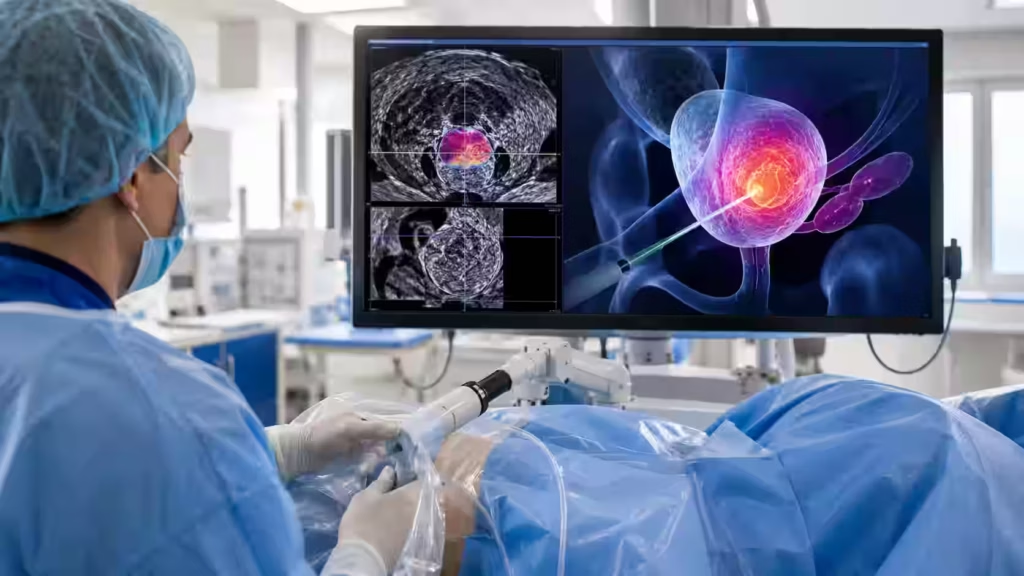
Focal therapy for prostate cancer is a minimally invasive treatment that destroys only the tumor and a safety margin of tissue, instead of removing or irradiating the whole prostate. Doctors use heat, cold, electric pulses, or light-based energy, guided by MRI and ultrasound, to target the cancer directly. The main draw is simple: you get cancer control with a much lower chance of the two side effects men fear most — erectile dysfunction and urinary incontinence.
Here’s what makes it worth reading further:
- Faster recovery than surgery or radiation, often with a same-day or overnight procedure
- Lower rates of incontinence and erectile dysfunction compared to whole-gland treatment
- A middle-ground option for men whose cancer is too significant for active surveillance but doesn’t yet require radical treatment
Below, we’ll break down how it works, who qualifies, what the data actually shows, and the questions to bring to your urologist.
What Is Focal Therapy for Prostate Cancer?
Focal therapy — sometimes called partial gland ablation or focal ablation — treats only the part of the prostate that contains the tumor. This differs from radical prostatectomy (removal of the whole prostate) and whole-gland radiation, both of which affect the entire organ and the tissue around it.
The logic behind focal therapy is that many prostate tumors have one dominant, clinically significant “index lesion” driving the cancer’s risk. By locating that lesion with multiparametric MRI (mpMRI) and MRI-fusion biopsy, doctors can ablate it while leaving the rest of the gland — and the nerves and muscles that control erections and continence — largely untouched.
How Focal Therapy Works: The Main Modalities
Focal treatment isn’t one single procedure. It’s a family of energy-based techniques, each with its own strengths:
- High-Intensity Focused Ultrasound (HIFU): Uses focused sound waves to heat and destroy tumor tissue without incisions.
- Cryoablation: Freezes the tumor using thin needle-like probes.
- Irreversible Electroporation (IRE / NanoKnife): Uses electrical pulses to destroy cancer cells while sparing surrounding blood vessels and nerves.
- Focal Laser Ablation: Delivers targeted heat through a laser fiber, often under real-time MRI guidance.
- Vascular-Targeted Photodynamic Therapy: Activates a light-sensitive drug to destroy tumor tissue from within.
All of these are performed under image guidance, and most patients go home the same day or after one night in the hospital.
Benefits of Focal Therapy Over Whole-Gland Treatment
The main appeal of focal therapy is preserving quality of life without walking away from cancer control. According to a systematic review and meta-analysis of prospective studies published in European Urology Oncology, pooled data from over 4,600 patients found that new erectile dysfunction occurred in roughly 11% of cases, and pad-requiring urinary incontinence increased by only about 3%, well below the rates typically reported after radical prostatectomy or radiation.
Other patient-reported advantages include:
- Preserved sexual function for the majority of previously potent men
- Minimal or no incontinence in most cases
- Shorter hospital stay and recovery time than radical surgery
- The option to repeat treatment or move to radical therapy later if the cancer recurs
Focal Therapy vs. Radical Prostatectomy vs. Active Surveillance
| Factor | Active Surveillance | Focal Therapy | Radical Prostatectomy / Radiation |
|---|---|---|---|
| Invasiveness | None (monitoring only) | Minimally invasive | Highly invasive (surgery) or non-invasive but whole-gland (radiation) |
| Erectile dysfunction risk | None from treatment | Low-to-moderate | High (up to ~70–79% after prostatectomy) |
| Urinary incontinence risk | None from treatment | Low (often under 5%) | Moderate-to-high |
| Recovery time | None | Days | Weeks to months |
| Best suited for | Very low-risk, slow-growing cancer | Low- to favorable intermediate-risk, single-lesion cancer | Localized cancer needing definitive whole-gland treatment |
| Long-term outcome data | Extensive | Still maturing | Extensive |
Who Is a Good Candidate for Focal Therapy?
Focal therapy isn’t right for everyone. Because prostate cancer can appear in multiple spots at once, doctors are careful about who they recommend it to. Good candidates typically have:
- A single, well-defined tumor confirmed by mpMRI and targeted biopsy
- Low-risk or favorable intermediate-risk disease (for example, a PSA between 10–20, Gleason grade group 2–3, and less than half of biopsy cores positive)
- No evidence the cancer has spread beyond the prostate
- A strong preference for preserving sexual and urinary function
Men with widespread, high-grade, or multifocal disease are generally steered toward active surveillance (if low-risk) or whole-gland treatment (if aggressive).
Also Read: What Is Actinic Keratosis? Early Signs of Sun-Damaged Skin
What Are the Risks and Side Effects?
Focal therapy is far from risk-free. A review on focal therapy complications published on PubMed Central (PMC/NCBI) notes that urinary tract infection or acute retention can occur in up to 17% of patients shortly after the procedure, though these are usually short-lived. Erectile dysfunction rates vary widely by modality and baseline function, and urinary incontinence — while uncommon — does still occur in a small percentage of cases.
It’s also worth noting: the American Urological Association’s clinically localized prostate cancer guideline currently classifies whole-gland and focal ablation as investigational, since long-term, high-quality studies comparing focal therapy directly to surgery and radiation are still limited. This doesn’t mean focal therapy isn’t effective — the early- and mid-term data look encouraging — but it does mean the long-term picture is still being filled in.
“Focal therapy represents a middle ground between active surveillance and more radical options,” says Rafael Sanchez-Salas, MD, associate professor of urology at McGill University. (Urology Times)
Frequently Asked Questions
Is focal therapy a cure for prostate cancer? It can achieve strong cancer control in well-selected patients, but because prostate cancer can be multifocal, some men eventually need additional treatment. Ongoing PSA monitoring and follow-up biopsies are standard after the procedure.
How long does recovery take? Most men return to normal activity within days, compared with weeks or months after radical prostatectomy.
Does insurance cover focal therapy? Coverage varies by insurer, technology, and country, since some techniques are still considered investigational in certain guidelines. Check directly with your provider and insurance plan.
Can focal therapy be repeated? Yes. If a new or recurrent lesion appears, many patients can undergo a second focal procedure or move to whole-gland treatment.
Disclaimer: The information provided in this article is for educational purposes only and is not intended as a substitute for professional medical advice, diagnosis, or treatment. Always seek the advice of your physician or a qualified urologist before making decisions about prostate cancer screening or treatment.