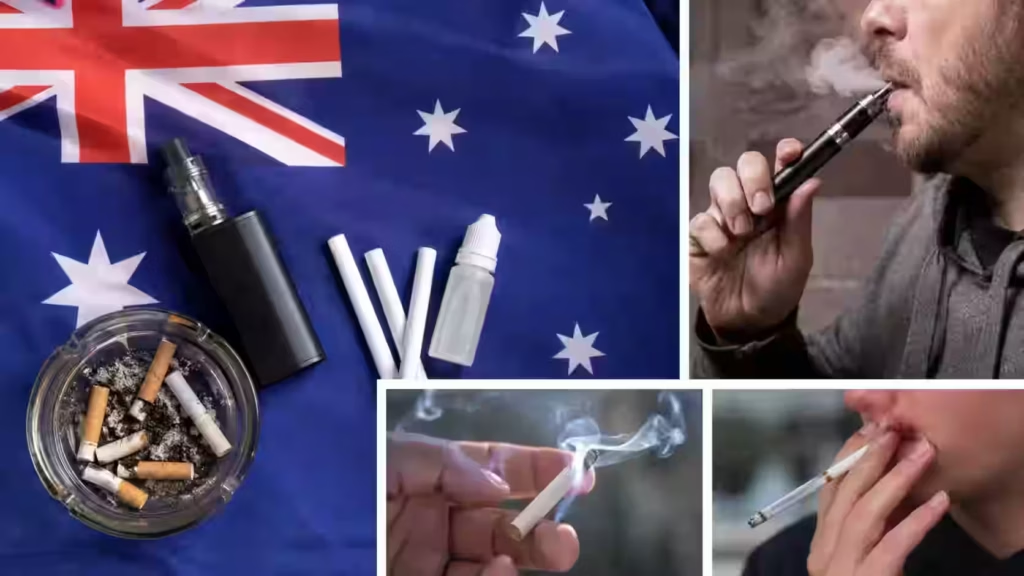
In 2025, about 15.2% of Australians used a nicotine product in the past year, the lowest rate ever recorded — but the picture underneath that number is more complicated than “nicotine use is falling.” Cigarette smoking keeps dropping, vaping has leveled off after years of rapid growth, and a brand-new product category, nicotine pouches, is expanding fast enough that the government stepped in with new rules in 2026.
Here’s the quick version before we get into the data:
- Smoking is at a historic low — daily smoking has fallen from 12% in 2016 to roughly 8.3% today
- Vaping has plateaued, not disappeared, and remains concentrated among people in their 20s and 30s
- Nicotine pouches are the newest concern, prompting a prescription-only rule that took effect in 2026
Below, we break down exactly what the latest surveys show, who’s using what, and what the health risks actually are.
What Do the Latest Nicotine Use Numbers in Australia Show?
The gold-standard source for this data is the National Drug Strategy Household Survey, run by the Australian Institute of Health and Welfare (AIHW). The most recent 2025 results show that overall nicotine product use (smoking, vaping, or both) fell to its lowest level since the survey began tracking it. At the same time, the survey flagged a new trend: a growing share of nicotine users now report using three or more different nicotine products, rather than sticking to one.
That combination — falling overall use, but more product-switching — is the defining story of nicotine in Australia right now.
Cigarette Smoking Rates in Australia: Still Falling
Smoking remains the single biggest driver of preventable disease in Australia, but it also keeps declining. According to AIHW data, daily tobacco smoking dropped from about 12% of the population in 2016 to 8.3% in 2022–23, continuing a downward trend that’s cut smoking by roughly two-thirds over the past 30 years. More recent modeling from the Australian Government Department of Health puts current smoking (any use, not just daily) at around 10.5% in 2024, still edging down from prior years.
Key drivers of the decline include:
- Ongoing tobacco excise tax increases
- Plain packaging and graphic warning laws
- A steady rise in Australians who have never smoked (now well over 60% of adults)
Vaping in Australia: Where the Numbers Stand in 2026
Vaping told a very different story for most of the last decade — daily e-cigarette use jumped from just 0.5% of the population in 2016 to 3.5% in 2022–23, a seven-fold increase. But the most recent figures suggest that surge has cooled. The Department of Health’s 2024 tracking data shows current vaping at 8.2%, down from a peak of 17.3% among some age groups in 2023, following tighter pharmacy-only sales rules introduced in October 2024.
Vaping is not evenly spread across the population. It’s heavily concentrated among younger adults:
- 9.3% of 18–24-year-olds vape daily
- 6.5% of 25–29-year-olds vape daily
- Roughly two-thirds of nicotine users aged 25–34 currently vape, rather than smoke
Nicotine Pouches: The Fastest-Growing Nicotine Product in 2026
Nicotine pouches — small, tobacco-free pouches placed between the lip and gum — barely registered in Australian data before 2024. By 2026, they’ve become enough of a public health concern that regulators moved to restrict them.
New Nicotine Pouch Rules From July 2026
The Therapeutic Goods Administration (TGA) reclassified nicotine pouches as a Schedule 4 prescription-only product in early 2026. From 24 July 2026, pouches are no longer accessible through the Personal Importation Scheme, the Special Access Scheme, or Authorised Prescriber pathways, and pharmacists can no longer compound them for individual patients. In practice, that means legal access now requires a prescription from a doctor.
Research from the University of Melbourne’s Melbourne Centre for Behaviour Change has flagged that pouches carry high nicotine concentrations, raising concern about dependence risk, particularly among adolescents and young adults who may see them as a discreet, “safer-seeming” alternative to vaping.
Also Read: Burning When You Pee? Here’s What Dysuria Could Mean
Nicotine Products in Australia: Quick Comparison
| Product | Legal Status (2026) | Most Common Users | Main Health Concerns |
|---|---|---|---|
| Cigarettes | Legal for adults 18+; heavily taxed | Adults 50+ (89% of nicotine users in this group smoke) | Lung cancer, heart disease, COPD, stroke |
| Vapes/E-cigarettes | Pharmacy-only sale, adults 18+ | Adults 18–34 | Lung irritation, nicotine dependence, possible carcinogenic risk |
| Nicotine pouches | Prescription-only from July 2026 | Young adults, some adolescents | High nicotine dose, dependence, poisoning risk in children |
Health Risks of Nicotine Use
Regardless of the delivery method, nicotine itself carries real risks — and each product adds its own on top:
- Brain development harm: Nicotine can disrupt brain development in people under 25, affecting attention, learning, memory, and mood, according to the Australian Government Department of Health.
- Respiratory effects: People who vape but have never smoked still show a meaningfully higher risk of respiratory symptoms than people who’ve never used any nicotine product, based on a 2026 review published in Drug and Alcohol Review.
- Possible cancer risk: A 2026 UNSW-led review found nicotine-based vapes are likely carcinogenic to the lungs and oral cavity, based on biomarker studies, animal research, and mechanistic evidence.
- Dependence and poisoning: Illegal vapes tested in Australia have been found to contain formaldehyde and heavy metals alongside nicotine, and nicotine pouches carry a distinct child-poisoning risk due to their concentrated dose.
“The evidence shows e-cigarettes carry significant harms. Nicotine is a key ingredient and one of the most addictive substances known,” says Professor Emily Banks, National Centre for Epidemiology and Population Health, Australian National University. (ANU Reporter)
The Growing Illicit Nicotine Market
One trend cutting across every product category is the rise of the illicit market. With legal cigarette prices reaching A$40–$50 a pack and vape sales restricted to pharmacies, unregulated products — sold far below legal prices — have become a larger share of what Australians actually consume. This matters for public health because illicit products aren’t subject to any quality or content controls, so buyers have no way of knowing what’s actually in them.
Frequently Asked Questions
Is nicotine use in Australia going up or down overall? Down. Past-year use of any nicotine product fell to 15.2% in 2025, the lowest level the AIHW has recorded — but more people are now combining multiple product types.
Are nicotine pouches legal in Australia? Only with a prescription as of 2026. Retail sale without one is illegal, and unauthorized import or sale carries significant fines.
Is vaping safer than smoking? Vaping likely exposes users to fewer toxic chemicals than combustible cigarettes, but health authorities are clear that it is not risk-free — it’s linked to respiratory harm, nicotine dependence, and a possible cancer risk that’s still being studied.
Who is most likely to vape in Australia? Adults aged 18–34, with the highest daily rates seen in the 18–24 age group.
Disclaimer: The information provided in this article is for educational purposes only and is not intended as a substitute for professional medical advice, diagnosis, or treatment. Always seek the advice of your physician before starting or stopping any nicotine product, and contact Quitline (13 7848) for free support to quit smoking or vaping in Australia.