Cyclospora Foods to Avoid
Right now, “foods to avoid” falls into two categories: produce linked to the 2026 outbreak (to prevent getting sick), and foods that worsen symptoms if you’re already infected. Michigan and Ohio have now passed 5,500 combined cases, and the CDC counts nearly 7,000 confirmed-or-under-investigation cases (1,645 confirmed, 5,100+ under review) across 34 states, with 141 people hospitalized nationally. In a major update, the CDC and FDA have now confirmed shredded iceberg lettuce served at Taco Bell as the source of one large cluster within the outbreak. One reassuring, often-overlooked fact: no commercially frozen produce, cooked food, or peeled fruit has ever been linked to a Cyclospora outbreak — cooking and freezing are your safest bets right now. If you’re already sick, avoid dairy, fried food, spicy food, raw produce, caffeine, and alcohol. Here’s the full breakdown.
Foods Historically Linked to Cyclospora Outbreaks
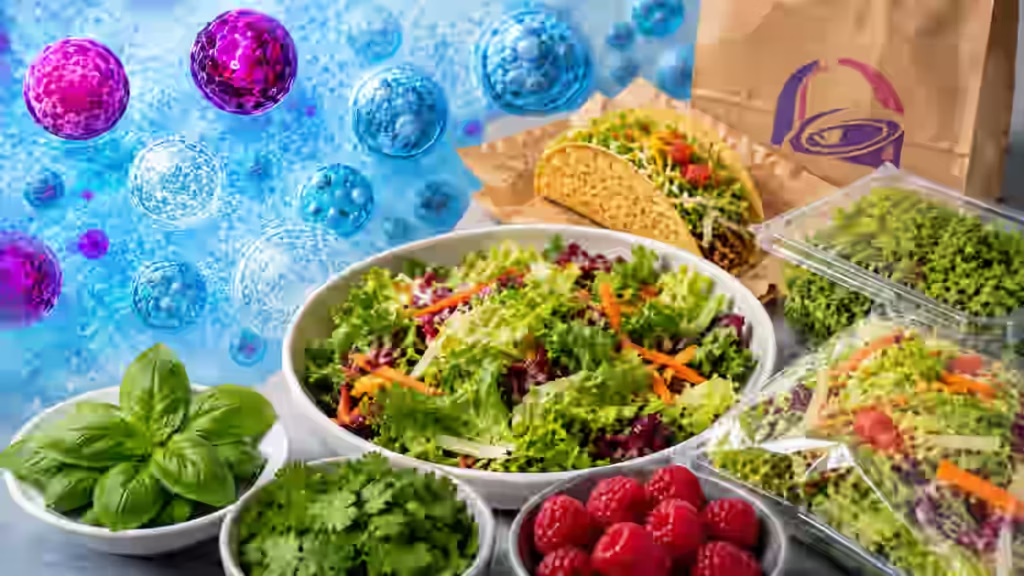
Not every 2026 case has been traced to a single food, but one major cluster now has a confirmed source (shredded iceberg lettuce — more on that below). Reviews of past U.S. and Canadian Cyclospora outbreaks going back to the 1990s point to a consistent list of higher-risk items — almost all of them fresh produce that’s typically eaten raw:
- Lettuce, mesclun, and bagged salad mixes/kits (romaine, iceberg, red cabbage, carrot blends)
- Basil and cilantro
- Green onions
- Snow peas
- Raspberries and blackberries
- Watercress
- Mango
- Vegetable trays
The parasite typically gets onto produce through irrigation water or soil contaminated with feces, which is why it clusters around fresh, raw items rather than a specific brand or grower.
“Cyclospora is contaminating the most healthful, delicious, seasonal foods there are.”
— Dr. Bruce Hirsch, infectious disease specialist, to Nexstar’s WPIX
Good News: These Foods Are Not a Risk
This is worth stating clearly, since it’s easy to feel like you should avoid the produce aisle entirely: to date, no commercially frozen produce, cooked food, or peeled fruit has ever been associated with a Cyclospora infection, according to a review of past outbreaks. That means:
- Frozen berries and vegetables are considered safe
- Cooked greens, herbs, and vegetables are considered safe
- Fruit you peel yourself (bananas, oranges, melon) carries essentially no risk, since the parasite sits on the outer surface
Health officials aren’t telling anyone to stop eating fruits and vegetables — they’re still an essential part of a healthy diet. The practical takeaway is simply to lean toward cooked, frozen, or peeled versions of the higher-risk items above while the investigation continues, rather than cutting produce out altogether.
What’s Different About the 2026 Outbreak: The Taco Bell Lettuce Link
A few developments are worth knowing if you want to reduce your risk right now:
- Shredded iceberg lettuce at Taco Bell is now a confirmed source for one cluster of more than 1,644 illnesses across five states — Indiana, Kentucky, Michigan, Ohio, and West Virginia — including 94 hospitalizations. The CDC’s guidance is direct: skip shredded iceberg lettuce from Taco Bell in those states.
- A single supplier was identified by an FDA traceback investigation as the source of the lettuce, based in Mexico. The CDC and FDA haven’t named the supplier publicly, though CNN and the Washington Post, citing sources familiar with the investigation, have reported it as Taylor Farms — a detail not yet officially confirmed by federal health agencies.
- This confirmation covers one cluster, not the whole outbreak. The CDC is still investigating multiple other cyclosporiasis clusters nationally that are unrelated to the Taco Bell findings, and no single food has been confirmed as the source of every 2026 case.
- Bagged, pre-cut salad mixes and kits have been specifically linked to past Cyclospora outbreaks in the U.S. and Canada, which is part of why officials continue to single them out.
Federal officials have also pointed to a broader pattern behind outbreaks like this one: cases tied to both domestic and imported produce have been rising in recent years, according to Gwen Biggerstaff, deputy director of the CDC’s Division of Foodborne, Waterborne, and Environmental Diseases.
How to Prep High-Risk Produce Safely
| Produce | Safer Prep | Safer Swap |
|---|---|---|
| Lettuce / leafy greens | Buy whole heads, not bagged; discard outer 2–3 layers; wash inner leaves under running water | Spinach quiche, soups, green shakshuka |
| Basil, cilantro | Separate the leaves fully while washing under running water | Cook into sauces or dishes rather than eating raw |
| Green onions | Cut off the roots, remove the outer layer, then rub under running water | Add to stir-fries or cooked dishes |
| Snow peas | Rinse well under running water | Cooked stir-fries |
| Raspberries, blackberries | Rinse well; bumpy surface makes full cleaning difficult | Simmer into jam, or bake into a pie |
| Firm produce (melons, cucumbers) | Scrub with a clean produce brush before cutting | — |
Washing techniques from Dr. Erika Noel, pediatrician and assistant professor at a Hawaii medical school. Recommendations on lettuce from the Michigan Department of Health and Human Services. “Pre-washed” on the package doesn’t guarantee safety, and rewashing bagged lettuce at home is unlikely to fully remove Cyclospora.
Extra Caution If You Have a Weakened Immune System
This is worth calling out on its own: people with weakened immune systems face a higher risk of severe disease from cyclosporiasis. Some infectious disease experts say this group may want to consider avoiding fresh produce altogether until a specific source is identified for their region, rather than relying on washing and prep techniques alone. If this applies to you or someone in your household, it’s worth a conversation with your doctor about your personal risk level right now, not just general food-safety steps.
Foods to Avoid If You Already Have Cyclosporiasis
Cyclosporiasis causes watery, sometimes explosive diarrhea that can last for weeks without treatment. While the antibiotic TMP-SMX (Bactrim) is the standard treatment, what you eat during recovery can meaningfully affect how you feel. This isn’t specific to Cyclospora — it’s the same general guidance doctors give for any infectious diarrhea, since the gut needs time to settle regardless of the cause.
Avoid These While Symptoms Are Active
- Dairy products (milk, cheese, ice cream) — temporary lactose intolerance is common during acute gut infections; plain yogurt with live cultures is usually the exception.
- Fried or high-fat foods — harder to digest and can worsen cramping.
- Spicy foods — can further irritate an already inflamed gut.
- Raw vegetables and high-fiber foods — harder to digest while your gut is inflamed (also, conveniently, the same category to be cautious of right now anyway).
- Caffeine and alcohol — both worsen dehydration, which is already a risk with ongoing diarrhea.
- Carbonated drinks and high-sugar foods/sodas — can pull more water into the gut and worsen loose stools.
- Artificial sweeteners (sorbitol, xylitol) — known to cause or worsen diarrhea on their own.
What to Eat Instead
The classic BRAT diet — bananas, rice, applesauce, toast — plus a few other bland options, is the standard starting point:
| Avoid | Eat Instead |
|---|---|
| Milk, cheese, ice cream | Plain yogurt with live/active cultures |
| Fried chicken, burgers, fatty cuts | Boiled or baked skinless chicken |
| Raw salad, cruciferous vegetables | Peeled, well-cooked carrots, zucchini, potatoes |
| Coffee, energy drinks, soda | Water, clear broth, oral rehydration solution, decaf tea |
| Whole wheat bread, bran cereal | White toast, plain crackers, white rice |
| Candy, sugary snacks | Bananas, applesauce |
Stay hydrated with water, broth, or an oral rehydration solution — this matters more than any single food choice, since dehydration is the main danger with prolonged diarrhea. Reintroduce regular foods gradually as symptoms improve; the BRAT diet alone isn’t nutritionally complete and isn’t meant to be followed for more than a couple of days.
One more note: don’t start over-the-counter anti-diarrheal medication (like loperamide/Imodium) without checking with a doctor first if you suspect an infection like cyclosporiasis, especially with fever — slowing the gut down can sometimes prolong how long the parasite stays in your system.
When to See a Doctor
Get medical care if diarrhea lasts more than a few days, if you can’t keep fluids down, or if you notice signs of dehydration (dizziness, dry mouth, very little urine). Ask specifically about Cyclospora testing if you’ve had ongoing watery diarrhea and a standard stool test came back negative — labs often need a special stain or PCR test to catch it. Symptoms typically start five to seven days after exposure, which can make it hard to trace back to a specific meal.
Frequently Asked Questions
Is frozen produce safe right now?
Yes. No commercially frozen produce has ever been linked to a Cyclospora outbreak, likely because most is blanched (briefly boiled) during processing.
Should I stop eating fruits and vegetables entirely?
No, unless your doctor advises it due to a weakened immune system. Health officials are recommending extra caution with specific high-risk raw items, not avoiding produce altogether.
Is it safe to eat salad right now?
Bagged, pre-cut salad mixes remain a focus of concern generally, and shredded iceberg lettuce from Taco Bell in five specific states is confirmed as a source of illness. Whole heads of lettuce, washed thoroughly (outer leaves discarded, inner leaves rinsed under running water), carry lower risk.
Can washing produce fully remove Cyclospora?
Not completely. Washing reduces risk but doesn’t guarantee removal — cooking produce to 158°F (70°C), when possible, is more reliable for killing the parasite.
Should I avoid all dairy if I have cyclosporiasis?
Mostly, yes, aside from plain yogurt with live cultures. Acute gut infections often cause temporary lactose intolerance, so dairy can worsen diarrhea until your gut recovers.
Is the Taco Bell connection confirmed now?
Yes, for a specific cluster. As of July 16, 2026, the CDC and FDA confirmed shredded iceberg lettuce served at Taco Bell locations in Indiana, Kentucky, Michigan, Ohio, and West Virginia as the source of more than 1,644 illnesses. Taco Bell has voluntarily removed the affected lettuce from its supply chain nationwide. This confirmation applies to that cluster specifically — the broader nationwide outbreak includes other clusters where a source hasn’t been identified.
With Michigan and Ohio past 5,500 combined cases and the CDC now confirming a lettuce source for the largest single cluster, caution around bagged lettuce, salad kits, and other raw high-risk produce is the most useful step you can take right now — but that doesn’t mean avoiding fruits and vegetables altogether. Lean on cooked, frozen, or peeled versions of higher-risk items, skip shredded iceberg lettuce from Taco Bell in the five affected states, and if you have a weakened immune system, talk to your doctor about your personal risk. If you’re already sick, skip dairy, fried and spicy food, raw produce, caffeine, and alcohol, lean on bland foods like the BRAT diet, and prioritize fluids. See a doctor — and ask specifically for cyclospora testing — if diarrhea drags on or you can’t stay hydrated.
Also Read: Cyclospora Outbreak 2026: Symptoms, Causes & How to Protect Yourself
Disclaimer: This article is for general information only and is not a substitute for medical advice, diagnosis, or treatment. Talk to a healthcare provider if you have ongoing diarrhea or think you may have cyclosporiasis.