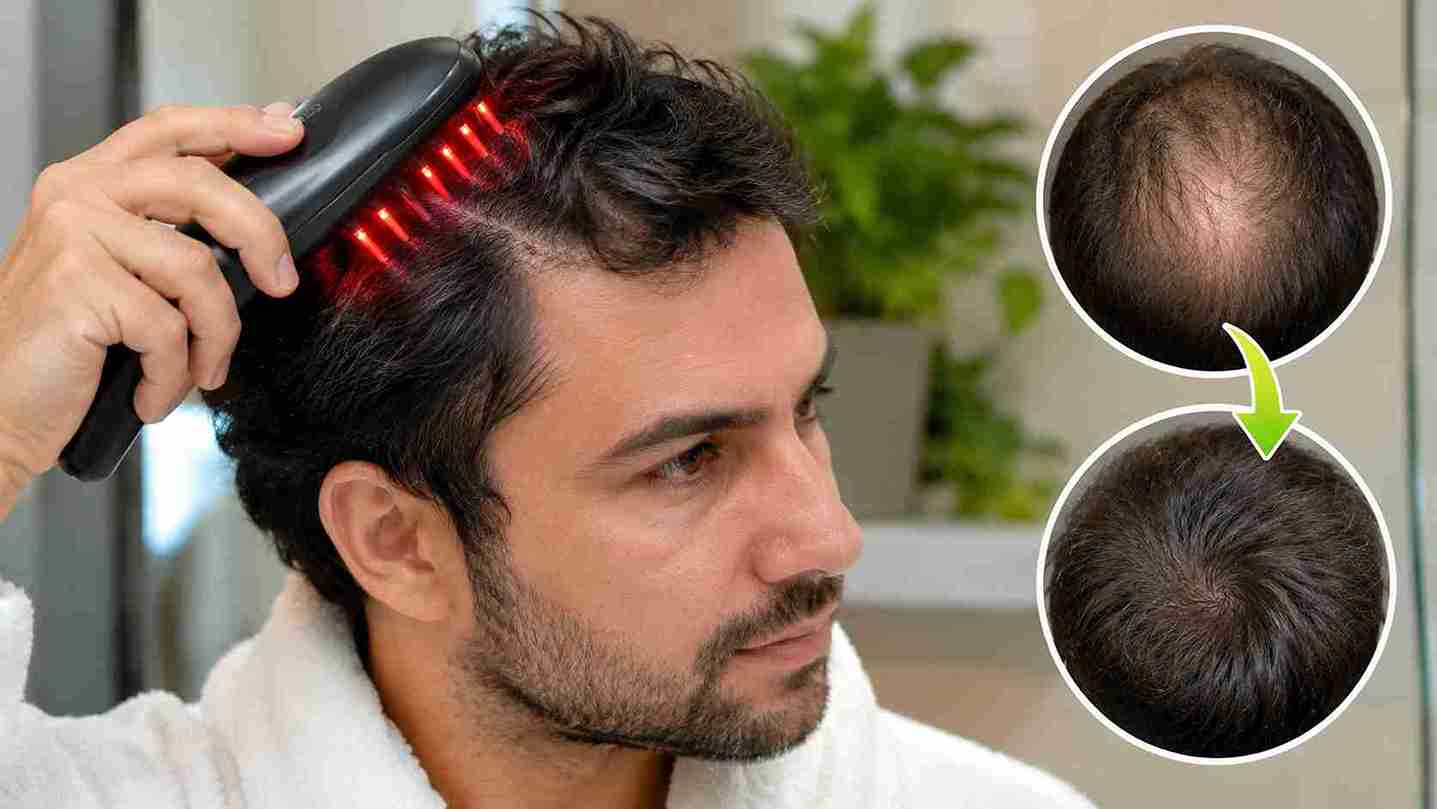
Alopecia is the medical term for hair loss, ranging from small, round bald patches to complete baldness. It has several distinct causes — autoimmune disease, genetics, hormones, physical tension on the hair, and underlying health conditions — and the right treatment depends entirely on which type you have. Some forms, like stress-related shedding, resolve on their own within months. Others, like scarring alopecia, need early treatment to prevent permanent follicle damage. Below is a complete breakdown of the types, causes, diagnosis, and current treatment options — including a September 2026 FDA update most hair-loss guides haven’t covered yet.
What Is Alopecia?
“Alopecia” simply means hair loss — it’s not one disease but an umbrella term covering many different conditions with different causes and outlooks. Some types are temporary and fully reversible; others involve permanent scarring of the hair follicle, which is why identifying the specific type matters more than treating “hair loss” generically.
How Common Is Alopecia?
Alopecia areata alone affects roughly 7 million people in the United States, with about 1 in 5 cases starting in childhood. Among people who develop it, an estimated 5% progress to alopecia totalis (total scalp hair loss) and about 1% to alopecia universalis (total body hair loss). The lifetime risk of developing alopecia areata at some point is estimated at around 2%. Androgenetic (pattern) alopecia is far more common still — by some estimates it affects roughly half of men by age 50 and a significant share of women, particularly after menopause.
How Much Hair Loss Is Normal?
Before worrying about alopecia, it helps to know the baseline. Losing 50 to 100 hairs a day is considered normal, since roughly 10–15% of your hair is naturally in a resting or shedding phase at any given time. This is shedding, not hair loss — each lost hair is normally replaced by a new one. It becomes a concern when shedding clearly exceeds that range, continues for months, or is accompanied by visible thinning, patches, or a receding hairline.
Types of Alopecia
| Type | What’s happening | Typical pattern | Reversible? |
|---|---|---|---|
| Alopecia areata | Autoimmune attack on hair follicles | Smooth, round patches; sometimes pitted nails | Often, especially if mild |
| Androgenetic alopecia (male/female pattern) | Genetically driven, hormone-sensitive follicle shrinkage | Men: receding hairline + crown. Women: diffuse thinning at the part | Progressive, but treatable |
| Telogen effluvium | Stress, illness, or hormonal shifts push hairs into shedding early | Diffuse, all-over shedding | Usually, within 6–9 months |
| Traction alopecia | Repeated pulling from tight hairstyles | Hairline and temples | Yes early on; permanent if scarred |
| Lichen planopilaris | Scarring immune attack on hair-bearing scalp skin | Smooth patches with redness, itching, or burning | No, once scarring occurs |
| Frontal fibrosing alopecia | A lichen planopilaris variant targeting the frontal hairline | Band-like recession, eyebrow loss | No, once scarring occurs |
| Central centrifugal cicatricial alopecia (CCCA) | Scarring alopecia starting at the crown | Spreads outward from the vertex | No, once scarring occurs |
| Alopecia totalis / universalis | Severe forms of alopecia areata | Totalis: entire scalp. Universalis: entire body | Sometimes, with newer drugs |
Alopecia Areata
Alopecia areata is an autoimmune condition in which the immune system mistakenly attacks healthy hair follicles. Normal follicles in their active growth phase are thought to be shielded from immune attack; in alopecia areata, that protection appears to break down, allowing immune cells to target the follicle. It typically starts as one or more coin-sized, round, smooth patches, most often on the scalp but sometimes in the eyebrows, beard, or elsewhere on the body. A useful early clue is the “exclamation point hair” — a short, broken strand that’s thicker at the tip and tapers near the scalp — often visible at the edge of a new patch. Nail pitting or ridging shows up in an estimated 10–40% of cases, usually alongside more extensive disease.
Alopecia areata has several recognized variants:
- Alopecia totalis — complete loss of scalp hair.
- Alopecia universalis — complete loss of hair across the scalp and body.
- Ophiasis — a band of hair loss along the sides and back of the scalp.
- Diffuse alopecia areata (also called alopecia areata incognita) — rapid, widespread thinning rather than distinct patches, which can be mistaken for telogen effluvium.
Doctors often grade severity using the SALT score (Severity of Alopecia Tool), which measures the percentage of the scalp affected — SALT 50, for example, means half the scalp has lost hair. This score is also how clinical trials measure whether a treatment is working.
Androgenetic (Androgenic) Alopecia
This is the most common cause of hair loss overall, driven by genetically inherited sensitivity to androgens (hormones like DHT) that gradually shrink hair follicles. The pattern differs by sex:
- In men, it causes a receding hairline and thinning crown, classically progressing toward partial or total baldness, often described using the Norwood scale.
- In women, it’s usually described using the Ludwig Classification, and the hairline rarely recedes — instead, thinning starts at the part line and spreads diffusely across the top of the scalp, with complete baldness being uncommon.
Telogen Effluvium
Telogen effluvium happens when a shock to the body — major illness, surgery, childbirth, a crash diet, high fever, or severe emotional stress — pushes an unusually large share of hairs into the resting (telogen) phase at once. Two to three months later, those hairs shed all together, producing diffuse thinning rather than patches. It’s distressing but usually self-corrects within 6 to 9 months once the trigger resolves, and typically needs no treatment beyond addressing the underlying cause.
Traction Alopecia
Traction alopecia develops from prolonged or repeated tension on the scalp hair — tight ponytails, braids, cornrows, weaves, extensions, or tight headwear. It’s especially common among people who regularly wear tight hairstyles for cultural, religious, or professional reasons, including dancers and military personnel. Caught early, it’s reversible; left untreated, the constant pulling can permanently scar the follicle.
Scarring (Cicatricial) Alopecia
This group destroys the follicle itself, so hair loss is permanent once scarring sets in — making early diagnosis especially important. The most discussed forms:
- Lichen planopilaris: an inflammatory condition that produces smooth, often itchy or burning patches of scarring, more common in young to middle-aged women.
- Frontal fibrosing alopecia (FFA): considered a variant of lichen planopilaris; a band-like recession along the front and sides of the hairline, which often begins with eyebrow thinning before scalp changes appear, and most often affects postmenopausal women.
- Central centrifugal cicatricial alopecia (CCCA): starts at the crown and spreads outward in a circular pattern; it disproportionately affects Black women over 30.
What Causes Hair Loss?
The major causes fall into a few categories:
Excessive Use of Plastic Hairbrushes
Using a plastic hairbrush too often can create static electricity when the brush rubs against your hair. This can make your hair frizzy, messy, and harder to manage. Brushing your hair too roughly or too often can also cause friction, leading to hair breakage and split ends. Constantly pulling or tugging at your hair can even damage the hair follicles over time and contribute to hair loss.
Tip: Avoid brushing your hair unnecessarily or too aggressively. Use a gentle brush or a wide-tooth comb to remove tangles without pulling on your hair.
Did You Know? Static electricity from plastic hairbrushes does not directly cause hair loss. However, frequent rough brushing and excessive pulling can damage your hair and contribute to breakage.
- Genetics — the single biggest factor in androgenetic alopecia, inherited from either parent’s side.
- Hormones — androgens, thyroid imbalance, pregnancy, and menopause can all trigger shedding or pattern thinning.
- Autoimmune activity — the driver behind alopecia areata and most scarring alopecias. People with alopecia areata also have higher rates of other autoimmune conditions, including thyroid disease and vitiligo.
- Physical tension — tight hairstyles (traction alopecia).
- Physical or emotional stress, illness, or surgery — can trigger temporary telogen effluvium.
- Nutritional deficiencies — iron and protein deficiency are common contributors; significant or rapid weight loss is a recognized risk factor.
- Medications — certain drugs (including some for cancer, arthritis, depression, and high blood pressure) list hair loss as a side effect.
- Scalp infections — conditions like ringworm (tinea capitis) can cause patchy, scaling hair loss that’s often mistaken for alopecia areata but needs antifungal, not immune-suppressing, treatment.
- Radiation or chemotherapy — cancer treatment can cause temporary, sometimes full-body hair loss; hair usually regrows after treatment ends, though texture can change.
Is Alopecia Genetic?
Androgenetic alopecia is strongly hereditary and can be inherited from either parent. Alopecia areata also runs in families in some cases — researchers have linked it to over a dozen genetic risk regions — though genetics alone don’t fully explain it. It’s considered an autoimmune condition, so genetic predisposition combines with immune-system triggers rather than guaranteeing the condition will develop.
Alopecia in Women
Female pattern hair loss is common and often under-discussed. Nebraska Medicine dermatologist Ronald Sulewski, MD, notes that he sees more women than men for hair loss, in part because, as he puts it, “hair loss is less acceptable to most women” socially — which tends to delay women from seeking care. Common triggers in women include:
- Genetics (family history on either side)
- Hormonal shifts — puberty, pregnancy, stopping birth control, menopause
- Sudden physical or psychological stress
- Underlying thyroid or iron-deficiency issues
If hair loss appears alongside excess facial or body hair, irregular periods, or acne, a hormone evaluation is worth asking for, since those signs can point to an underlying hormonal cause — such as polycystic ovary syndrome — rather than pattern baldness alone. For a deeper look at options, the Harvard Health guide to treating female pattern hair loss is a solid clinical resource.
Alopecia in Men
Men experience noticeable hair loss more often than women, largely because of androgenetic alopecia’s sensitivity to dihydrotestosterone (DHT), a byproduct of testosterone. Alopecia areata and alopecia barbae (patchy beard hair loss) are also more commonly diagnosed in men, in part because facial hair loss is more visible. Male pattern baldness typically starts at the hairline or crown and can progress to partial or complete baldness; it’s assessed using the Norwood-Hamilton scale, which doctors use to track progression and plan treatment, including candidacy for transplant surgery.
Alopecia in Children
Hair loss in children is far less common than in adults, but it does happen — alopecia areata accounts for roughly 20% of all cases, and it often begins in adolescence. In kids, the more common culprits are tinea capitis (a fungal scalp infection), traction alopecia from tight hairstyles, trichotillomania (a hair-pulling habit, distinct from true alopecia), and telogen effluvium following illness or high fever. Because the causes are so different from adult-onset hair loss, a pediatrician or dermatologist should evaluate any child with noticeable hair loss rather than assuming it’s the same as adult pattern baldness.
Diagnosis
A dermatologist typically diagnoses the type of alopecia through a scalp exam and a review of hair-care habits and medical history. Depending on what they see, they may add:
- A hair pull test — gently grasping 40–60 closely grouped hairs and applying light traction; if more than 10% come away easily, it suggests active shedding.
- Trichoscopy — examining the scalp and hair shaft with a dermatoscope to look for exclamation point hairs, yellow or black dots, and other patterns specific to each alopecia type.
- Blood work — to rule out thyroid disease, iron deficiency, or other autoimmune markers.
- A scalp biopsy — most useful when scarring alopecia is suspected, since it can confirm follicle damage that other tests can’t.
The DermNet clinical guide to alopecia areata goes into more depth on how these findings are used to distinguish alopecia areata from look-alike conditions such as tinea capitis, trichotillomania, and discoid lupus affecting the scalp.
Hair Care Habits That Affect Hair Health
Hair-care habits don’t cause true alopecia on their own, but they can add mechanical stress that makes existing hair loss worse or causes visible breakage that looks like thinning. A few evidence-based habits worth adopting:
- Use a wide-toothed comb and a detangler, and avoid tugging — especially on wet hair, when strands are weakest and most prone to snapping.
- Limit harsh chemical treatments (relaxers, permanents) and high-heat styling, which weaken the hair shaft over repeated use.
- Loosen tight hairstyles and rotate where tension sits on the scalp to reduce traction alopecia risk.
- Protect hair from prolonged sun exposure, which can make hair more brittle over time.
A quick myth check: you may have seen claims that plastic hairbrushes cause hair loss by building up static electricity. This isn’t something dermatology organizations list as a cause of alopecia, and there’s no good evidence that static from brushing damages the follicle. What rough brushing — with any brush material — can do is snap or fray the hair shaft itself (split ends, visible breakage), which is cosmetic damage rather than true hair loss. If you’re seeing actual thinning or bald patches rather than frizz and flyaways, the cause is almost always one of the conditions covered above, not your hairbrush.
Treatment Options
Treatment depends entirely on the type:
- Minoxidil (topical, OTC) — the standard first-line treatment for both male and female pattern hair loss; usually takes about 12 weeks before visible regrowth.
- Finasteride — an oral prescription option, primarily used in men; evidence in women is more limited.
- Spironolactone — sometimes added for women who don’t respond fully to minoxidil.
- Corticosteroids — injected directly into patches, taken orally, or applied topically for alopecia areata; often combined with occlusive dressings for better absorption.
- Topical immunotherapy — a mild allergen (such as diphenylcyclopropenone) is applied to patches to trigger a contact reaction that can “distract” the immune system from attacking follicles; used for more extensive alopecia areata.
- Platelet-rich plasma (PRP) injections — concentrated plasma from the patient’s own blood, injected into the scalp to stimulate follicle activity.
- Microneedling — tiny scalp punctures that trigger a mild healing response and collagen production, sometimes paired with topical treatments.
- JAK inhibitors — a class of oral medication for severe alopecia areata that blocks the immune signaling behind follicle attack. See the updated breakdown below.
- Hair transplant surgery — an option for stable, pattern-type hair loss once the donor area is suitable.
- Wigs, styling, and camouflage — valid options at any stage, including while other treatments take effect.
Scarring alopecias (FFA, CCCA, lichen planopilaris) need the earliest possible treatment, because regrowth isn’t possible once a follicle has scarred — treatment there focuses on stopping further progression, typically with anti-inflammatory and immune-suppressing medication.
JAK Inhibitors: Updated for 2026
This is the fastest-moving area of alopecia treatment, and it’s changed since most hair-loss guides were last updated:
- Baricitinib (Olumiant) — approved for adults with severe alopecia areata in 2022. In September 2026, the FDA expanded this approval to adolescents aged 12 and older, based on 36-week data from the BRAVE-AA-PEDS trial.
- Ritlecitinib (Litfulo) — approved in 2023 for patients 12 and older, making it the first option specifically cleared for adolescents.
- Deuruxolitinib (Leqselvi) — approved in 2024 for adults with severe alopecia areata.
- Upadacitinib (Rinvoq) — not yet approved in the US as of this writing. It received a positive opinion from European regulators (CHMP) in June 2026 and is currently under FDA review after a submission in April 2026. If cleared, it would become the fourth approved JAK inhibitor for severe alopecia areata.
These medications carry boxed warnings around infection risk, blood clots, and other serious side effects, so they’re reserved for more severe or treatment-resistant cases and require ongoing monitoring with a prescribing physician.
Frequently Asked Questions
What is alopecia areata caused by? An autoimmune reaction where the immune system attacks hair follicles it shouldn’t. The exact trigger varies by person and can include genetics, stress, or illness.
How many hairs do you lose a day normally? Around 50–100 is considered normal daily shedding.
Is alopecia the same as going bald? No — “alopecia” covers all hair loss, including temporary and patchy forms. “Baldness” usually refers specifically to androgenetic (pattern) hair loss.
Can hair grow back after alopecia areata? Often, yes, especially for limited patches — many people regrow hair within months without treatment. More extensive or long-standing cases, including alopecia totalis and universalis, are harder to predict and less likely to respond to treatment.
Is traction alopecia permanent? Not if caught early. It becomes permanent only once the repeated pulling has scarred the follicle.
Does brushing with a plastic hairbrush cause hair loss? No reputable dermatology source lists static electricity as a cause of alopecia. Rough brushing can break the hair shaft and cause split ends regardless of brush material, but that’s breakage, not follicle-level hair loss.
Is alopecia areata linked to other autoimmune conditions? People with alopecia areata have higher-than-average rates of thyroid disease, vitiligo, and other autoimmune conditions, which is part of why doctors often check thyroid function and other markers during diagnosis.
What’s the difference between hair shedding and hair loss? Shedding is part of the normal hair cycle and self-corrects. Hair loss means the follicle itself is shrinking, damaged, or destroyed, so hair isn’t fully replaced.
When to See a Doctor
Talk to a doctor or dermatologist if you notice sudden or patchy bald spots, hair loss alongside itching, redness, or scalp pain, thinning that’s progressing quickly, nail pitting alongside hair loss, or any hair loss that’s affecting your confidence or wellbeing. Effective treatments exist for most types, according to the American Academy of Dermatology, and starting early matters most for the scarring forms, where lost follicles can’t be recovered. Patient communities like the National Alopecia Areata Foundation can also be a useful source of support alongside medical treatment. For a broader clinical overview of symptoms and risk factors, see the Mayo Clinic’s guide to hair loss, and for more on diagnosis and day-to-day management, the Cleveland Clinic’s alopecia areata overview is a helpful companion resource.
Medical disclaimer: This article is for general information only and isn’t a substitute for professional medical advice, diagnosis, or treatment. If you’re losing hair, see a doctor or dermatologist for an individual evaluation.