What Is Qdenga?
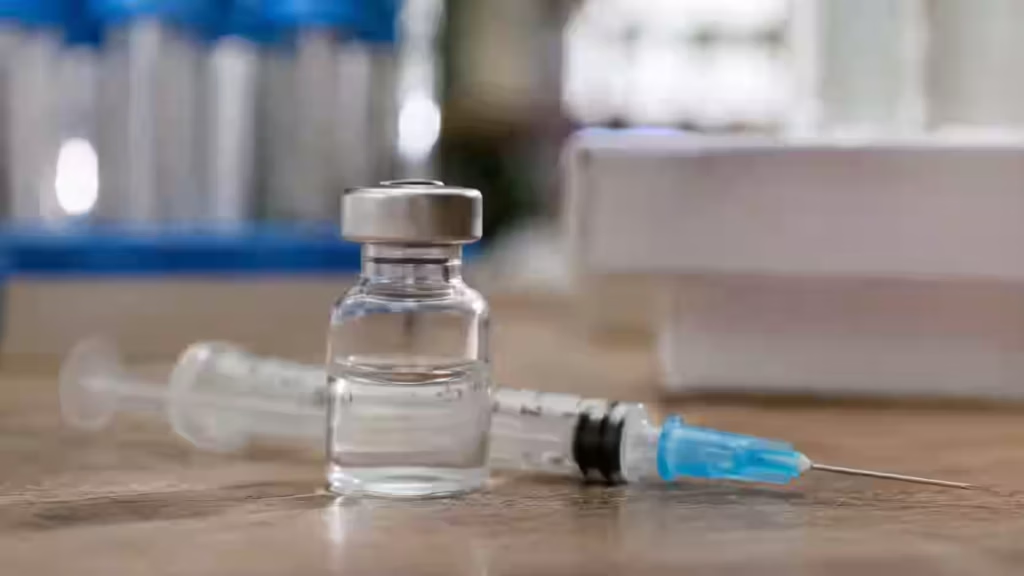
Qdenga is a live, attenuated (weakened) vaccine made by Takeda that protects against all four dengue virus serotypes with a single two-dose series. It works by exposing your immune system to a harmless, lab-modified version of the dengue virus so your body learns to fight off the real thing. Qdenga is now approved in more than 40 countries, and India just became the latest to clear it for use, on July 20, 2026.
What you need to know right away:
- Broad protection. It’s the only dengue vaccine approved for use regardless of whether you’ve had dengue before.
- Strong, lasting efficacy. Clinical trials show it prevents roughly 61% of symptomatic dengue cases and 84% of hospitalizations over more than 4 years.
- Two doses, three months apart. It’s given as a subcutaneous injection to people ages 4 to 60.
Keep reading for how the vaccine works at the immune-system level, full efficacy data by dengue strain, side effects, and why it still isn’t available in the United States.
India Approves Qdenga: What Just Happened
On July 20, 2026, India’s Central Drugs Standard Control Organisation (CDSCO) granted marketing authorization for Qdenga, making it the first dengue vaccine ever approved in the country. The vaccine will be imported by Takeda Biopharmaceuticals India and is approved for people ages 4 to 60.
This is a significant milestone: India carries one of the world’s heaviest dengue burdens, with large seasonal outbreaks driven by monsoon rains. The approval adds India to a growing list of more than 40 countries where Qdenga is authorized, including Indonesia, several European nations, and multiple countries across Latin America.
How Does Qdenga Work?
Qdenga is a tetravalent, live-attenuated vaccine, meaning it contains weakened forms of all four dengue virus serotypes (DENV-1, DENV-2, DENV-3, and DENV-4) that can’t cause dengue disease but still teach your immune system to recognize the real virus.
The DENV-2 “Backbone” Design
Rather than building four separate vaccines, Takeda engineered Qdenga around a weakened DENV-2 virus as the genetic backbone, then swapped in the surface proteins from DENV-1, DENV-3, and DENV-4 onto that same backbone. According to a study published in Nature Medicine, this chimeric design lets a single injection train the immune system to recognize all four strains at once, rather than requiring four different shots.
Why Dengue Vaccines Are Especially Tricky
Dengue is unusual among viral diseases: getting infected with one serotype and later catching a different one can actually raise your risk of severe disease, a phenomenon called antibody-dependent enhancement. This is part of why an earlier dengue vaccine, Dengvaxia, ran into safety problems in people who’d never had dengue before. Qdenga’s DENV-2-backbone design was intended to reduce this risk, though — as covered below — protection still varies by strain and prior exposure.
Qdenga Dosage and Administration
- Doses: 2 doses, given 3 months apart
- Route: Subcutaneous injection (under the skin, not into the muscle)
- Form: Freeze-dried powder, reconstituted before injection
- Approved ages: 4 to 60 years (varies slightly by country’s regulatory approval)
- Pre-vaccination testing: Not required in most high-transmission settings, per WHO guidance — though some countries, like the UK, currently restrict it to people with confirmed prior dengue infection
How Effective Is Qdenga? The Efficacy Data
Qdenga’s effectiveness comes from the TIDES study, a Phase 3 trial that followed roughly 20,000 children and adolescents across Asia and Latin America for more than 7 years. According to Clinical Trials Arena’s coverage of the trial results, two doses prevented symptomatic, confirmed dengue in 61.2% of participants and hospitalization in 84.1% of participants at the 4.5-year mark.
| Outcome | Efficacy (12 months) | Efficacy (4.5 years) |
|---|---|---|
| Symptomatic, confirmed dengue (any serotype) | ~80% | 61.2% |
| Hospitalization from dengue | ~95% | 84.1% |
| DENV-2 specifically | ~98% | Highest of all 4 serotypes |
| DENV-3 specifically | ~63% | Lower; limited in seronegative people |
| DENV-4 specifically | Not demonstrated (few cases) | Not shown in seronegative people |
Efficacy Depends on Your Dengue History
This is the most important nuance about Qdenga: it works best in people who’ve already had a dengue infection before (seropositive individuals). A modeling study published via the National Center for Biotechnology Information found the vaccine is highly protective against DENV-2 regardless of prior exposure, but only moderately protective against the other three serotypes in people who’ve had dengue before — and largely unproven against DENV-3 and DENV-4 in people who haven’t.
Does Protection Last?
Yes, largely. Antibody levels remained well above pre-vaccination levels through 51 months in trial follow-up. A booster dose given at 4.5 years pushed effectiveness back up to about 90.6% shortly after, settling at roughly 74.3% two years post-booster.
Who Should Get Qdenga?
Qdenga is generally recommended for:
- Children and adults ages 4–60 living in dengue-endemic areas
- Travelers heading to regions with active dengue transmission
- People whose jobs involve handling the dengue virus, such as lab workers
Some national health authorities, including the UK’s Joint Committee on Vaccination and Immunisation, currently limit Qdenga to people with a confirmed prior dengue infection, since data in seronegative travelers is more limited. Ask your travel medicine or public health provider what your country’s specific guidance is.
Who Should Not Get Qdenga?
Because Qdenga is a live vaccine, it isn’t right for everyone. According to Takeda’s official prescribing information, Qdenga is contraindicated for:
- Pregnant or breastfeeding women — women of childbearing age should avoid pregnancy for at least 1 month after vaccination
- People with a history of severe allergic reaction to a previous Qdenga dose or its ingredients
- People with weakened immune systems, including those on chemotherapy, high-dose corticosteroids, or with symptomatic HIV
- Anyone with acute, severe febrile illness at the time of the scheduled dose (a minor cold is not a reason to delay)
There’s currently no safety data for adults over 60 or limited data for people with chronic medical conditions, so your doctor may weigh Qdenga’s risks and benefits individually in those cases.
Qdenga Side Effects
In clinical trials involving more than 14,600 participants, most side effects were mild to moderate and cleared up within a few days.
Most Common Side Effects (Over 1 in 5 People)
- Pain and redness at the injection site
- Headache
- Muscle pain (myalgia)
- Feeling generally unwell (malaise)
- Weakness or fatigue
Less Common Side Effects
- Fever (up to 1 in 10 people)
- Decreased appetite (in children)
- Drowsiness and irritability (in children)
Rare cases of anaphylaxis have been reported, typically within 30 minutes of vaccination — which is why vaccine providers monitor patients for a short period after injection, as with most vaccines.
Is Qdenga Available in the United States?
Not currently. Takeda withdrew its FDA application for Qdenga in 2023 after regulators requested additional data the company’s late-stage trial hadn’t captured. This leaves an unusual gap: the only dengue vaccine ever approved in the U.S., Sanofi’s Dengvaxia, is being discontinued by Sanofi in the third quarter of 2026 due to low global demand — and it was only ever approved for a narrow group (ages 9–16 with confirmed prior dengue infection, living in U.S. territories like Puerto Rico).
“Some additional data was requested that we couldn’t provide.”
— Derek Wallace, President, Global Vaccine Business Unit, Takeda
That means, for now, U.S. travelers heading to dengue-endemic regions can’t get Qdenga domestically, though it may be available at destinations where it’s already approved. Anyone considering dengue vaccination while traveling should consult a travel medicine clinic well ahead of their trip.
Qdenga vs. Dengvaxia: How Do They Compare?
| Feature | Qdenga (Takeda) | Dengvaxia (Sanofi) |
|---|---|---|
| Approved regardless of prior dengue infection | Yes, in most countries | No — requires confirmed prior infection |
| Pre-vaccination testing required | Not in high-transmission settings | Yes, generally required |
| Doses | 2, three months apart | 3, over one year |
| U.S. approval status | Withdrawn from FDA review (2023) | Approved 2019; being discontinued 2026 |
| Countries approved | 40+ | ~20 |
Frequently Asked Questions
Does Qdenga protect against all types of dengue?
It’s designed to protect against all four dengue serotypes, but real-world protection is strongest against DENV-2 and weaker against DENV-3 and DENV-4, especially in people who’ve never had dengue before.
Can I get Qdenga if I’ve never had dengue?
In most countries with high dengue transmission, yes — Qdenga is approved regardless of prior infection. Some countries with lower transmission, like the UK, currently limit it to people with confirmed past infection due to more limited data in that group.
How many doses of Qdenga do I need?
Two doses, given three months apart.
Is Qdenga safe?
Clinical trial data across more than 28,000 participants and up to 7 years of follow-up shows no major safety signals in the general trial population. Most side effects are mild and short-lived. It is not recommended for pregnant or breastfeeding women or people with weakened immune systems.
Why isn’t Qdenga available in the U.S.?
Takeda withdrew its FDA application in 2023 after regulators asked for more data than the company’s trial had collected. It hasn’t reapplied as of this writing.
Qdenga represents real progress against a disease that infects an estimated 400 million people a year worldwide. With India’s approval this week, it’s now available in over 40 countries — though its protection varies by dengue strain and prior exposure, and it still isn’t available in the United States. If you live in or are traveling to a dengue-endemic area, talk to a healthcare provider or travel medicine clinic about whether Qdenga is right for you.
Also Read: What Is Ebola? Symptoms, Causes & Treatment
Disclaimer: The information in this article is for educational purposes only and is not intended as a substitute for professional medical advice, diagnosis, or treatment. Always seek the advice of your physician before starting any new health routine.