What Is Legionnaires’ Disease?

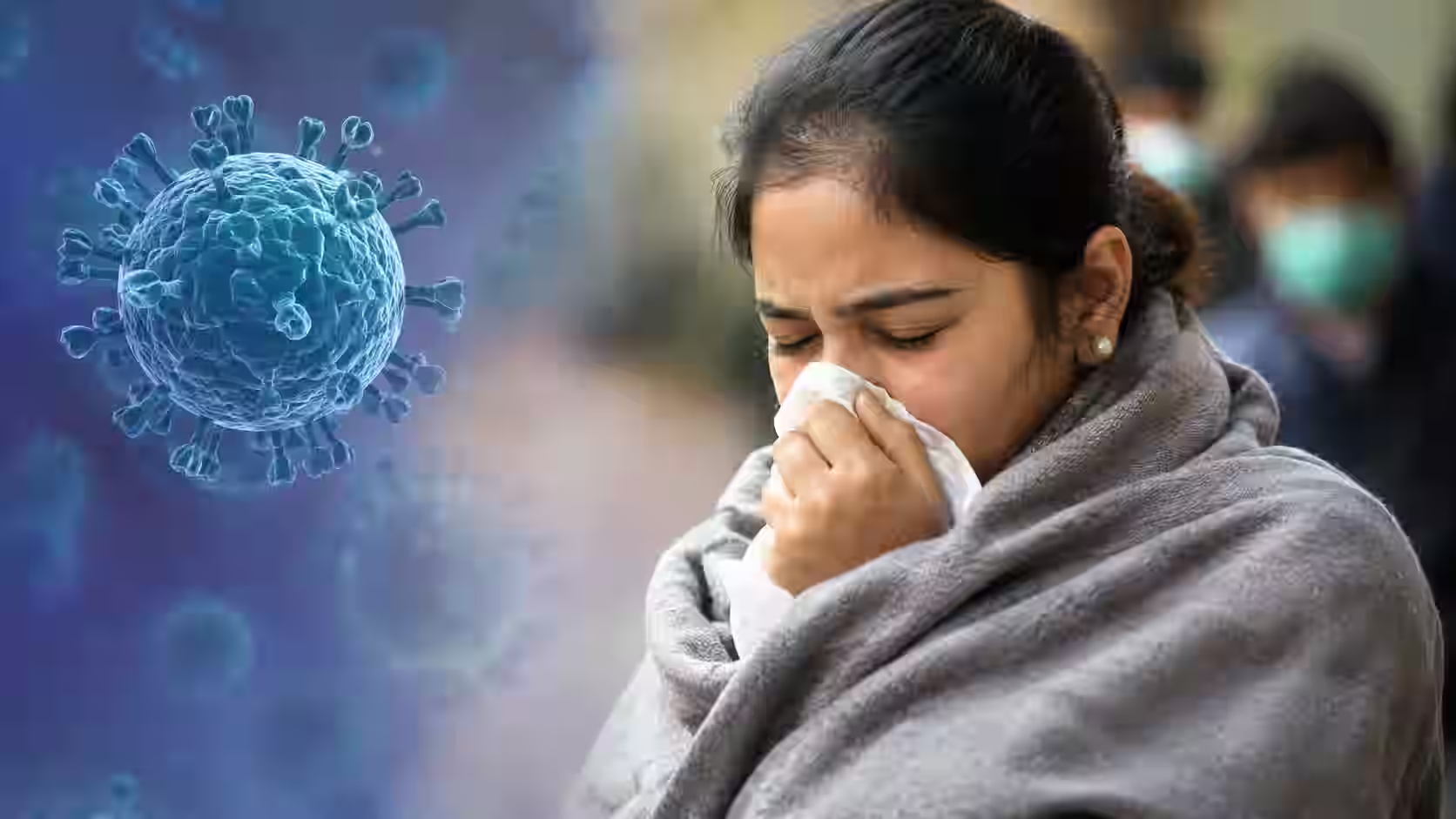
Legionnaires’ disease is a severe type of pneumonia (lung infection) caused by breathing in water mist or vapor contaminated with Legionella bacteria. It’s not spread person to person. Most healthy people who catch it recover with prompt antibiotic treatment, but the CDC says roughly 1 in 10 people who get it will die, and that risk climbs higher for older adults and people with weakened immune systems.
What you need to know right away:
- It’s treatable. Antibiotics cure most cases, especially when started early.
- It comes from water systems — cooling towers, hot tubs, showers, and fountains, not swimming pools or drinking water in most cases.
- It’s in the news right now. An active outbreak is spreading through Manhattan’s Upper East Side as of this week.
Keep reading for a full symptom checklist, how doctors diagnose and treat it, and the latest on the current outbreak.
Current Outbreak Update: Upper East Side, NYC (July 2026)
An active Legionnaires’ disease outbreak is spreading through Manhattan’s Upper East Side. As of July 19, 2026, the NYC Department of Health and Mental Hygiene (DOHMH) has confirmed 72 cases, 2 deaths, and 9 people currently hospitalized, with 50 patients already discharged after treatment.
“We are heartbroken to learn that another New Yorker has lost their life to Legionnaires’ disease.”
— Dr. Alister Martin, NYC Health Commissioner
The good news: the outbreak appears to be slowing. The health department reported fewer than one new case per day between July 10 and July 17, down sharply from more than eight new cases a day the week before. Investigators identified 31 cooling towers that tested positive for Legionella across the outbreak area, spanning three Upper East Side ZIP codes, and all 76 buildings ordered to clean and disinfect their cooling towers have now done so.
| Metric | Latest Figure (as of July 19, 2026) |
|---|---|
| Confirmed cases | 72 |
| Deaths | 2 |
| Currently hospitalized | 9 |
| Discharged after treatment | 50 |
| Cooling towers tested positive | 31 |
| Buildings disinfected | 76 of 76 |
| Outbreak area | 3 Upper East Side ZIP codes |
| New case trend | Slowing (under 1/day, down from 8+/day) |
If you live, work, or spent time on the Upper East Side recently and develop pneumonia-like symptoms, tell your doctor right away and mention the outbreak. For the latest count, check the NYC Health Department’s Legionnaires’ disease page.
What Causes Legionnaires’ Disease?
Legionnaires’ disease is caused by Legionella bacteria, which occur naturally in freshwater environments like lakes and streams but become dangerous when they grow and multiply in human-made water systems. According to the CDC, people get sick when they breathe in small droplets of water containing the bacteria.
Common Sources of Legionella Exposure
- Cooling towers — large air-conditioning units on top of buildings; the most common source in outbreaks
- Hot tubs and whirlpool spas
- Showers and faucets in hotels, hospitals, and large buildings
- Decorative fountains and misters
- Large, complex plumbing systems in hospitals and apartment buildings
Legionella grows best in warm, stagnant water between about 77°F and 108°F. It is not spread from person to person, and it’s rarely linked to swimming pools (which are chlorinated) or typical tap water used for drinking.
Legionnaires’ Disease Symptoms: The Full List
Symptoms usually begin 2 to 10 days after exposure, though the CDC notes it can occasionally take up to 14 days. The illness often starts like the flu and progresses to pneumonia over the next few days.
Early Symptoms (Days 1–2)
- Headache
- Muscle aches
- Chills
- Fever, which may reach 104°F (40°C) or higher
Later Symptoms (Day 2–3 Onward)
- Cough, which may bring up mucus or, sometimes, blood
- Shortness of breath
- Chest pain
- Nausea, vomiting, or diarrhea
- Confusion or other mental changes
- Loss of appetite and fatigue
Legionella mainly affects the lungs, but according to Mayo Clinic, it can occasionally spread to cause infections in wounds, the heart, and other organs.
Legionnaires’ Disease vs. Pontiac Fever
Legionella bacteria can also cause a much milder illness called Pontiac fever. It’s easy to confuse the two, so here’s how they differ:
| Feature | Legionnaires’ Disease | Pontiac Fever |
|---|---|---|
| Affects the lungs (pneumonia) | Yes | No |
| Onset | 2–10 days after exposure | Within hours to a few days |
| Duration | Days to weeks; can be severe | Usually resolves within a week |
| Treatment needed | Antibiotics, often hospitalization | None; resolves on its own |
| Fatality risk | About 1 in 10 | Essentially none |
Who Is Most at Risk?
Most healthy people exposed to Legionella don’t get sick. Risk factors that make severe illness more likely include:
- Age 50 or older
- Current or former smoking
- Chronic lung disease, such as COPD or emphysema
- Weakened immune system, including from cancer treatment, organ transplant, or certain medications
- Chronic conditions like diabetes, kidney failure, or liver disease
- Recent travel or hospital/hotel stay, since large plumbing systems are a common exposure point
How Is Legionnaires’ Disease Diagnosed?
Because symptoms look like other types of pneumonia, doctors need specific tests to confirm Legionella is the cause. A chest X-ray can confirm pneumonia, and according to CDC guidance, providers typically order:
- Urinary antigen test — a quick urine test that detects Legionella-specific proteins
- Sputum culture — growing bacteria from a mucus sample to confirm the exact strain
Tell your doctor if you’ve recently used a hot tub, traveled, stayed in a hospital, or spent time in an area with a known outbreak — that context can speed up diagnosis significantly.
Legionnaires’ Disease Treatment
Legionnaires’ disease is treated with antibiotics, and starting them early significantly lowers the risk of serious complications. According to the Occupational Safety and Health Administration (OSHA), commonly used antibiotics include fluoroquinolones like levofloxacin and newer macrolides like azithromycin.
- Most patients need hospital care, even though they’re often healthy beforehand.
- Recovery can take weeks, and fatigue or weakness may linger even after the infection clears.
- Pontiac fever needs no antibiotics — it resolves on its own within about a week.
There is currently no vaccine to prevent Legionnaires’ disease.
How to Protect Yourself
No. It spreads by breathing in contaminated water mist, not from person to person contact.
How serious is Legionnaires’ disease?
It can be very serious. About 1 in 10 people who get it die, and that risk is higher for older adults, smokers, and people with weakened immune systems. Most people who catch it need hospital care.
Can you get Legionnaires’ disease from tap water or a shower?
It’s possible but less common than cooling-tower exposure. Showers, faucets, and complex plumbing in large buildings like hospitals and hotels have been linked to cases, especially when water sits stagnant or runs at warm temperatures.
How long does it take to recover?
With prompt antibiotic treatment, many people improve within days to a couple of weeks, though full recovery and lingering fatigue can take longer. Some people have long-term health effects even after the infection clears.
Is there a vaccine for Legionnaires’ disease?
No. There is currently no vaccine or preventive medication. Prevention relies on proper maintenance of water systems.
Legionnaires’ disease is a serious but treatable lung infection, and early recognition makes the biggest difference in outcome. If you develop pneumonia symptoms after recent travel, a hotel or hot tub stay, or time spent in an active outbreak area, don’t wait — see a doctor and mention Legionnaires’ disease by name.
Also Read: Anaplasmosis Tick-Borne Disease: Symptoms & Treatment
Disclaimer: The information in this article is for educational purposes only and is not intended as a substitute for professional medical advice, diagnosis, or treatment. Always seek the advice of your physician before starting any new health routine.